
Key takeaways
- King's Field: The Ancient City, a PS2 game from 2002, directly precedes FromSoftware's Dark Souls franchise and shares fundamental design philosophies around difficulty and environmental hazards.
- The game uses poison as a recurring environmental challenge and features narrow platforming over hazardous terrain, foreshadowing similar design patterns in the Souls series.
- PS2-era technical limitations, including clunky camera controls and sluggish movement, challenge modern players but do not undermine FromSoftware's intentional design philosophy.
While FromSoftware has become synonymous with the Dark Souls franchise and the broader wave of “Souls-like” games that followed, the studio’s path to mainstream recognition wasn’t forged exclusively by those titles. King’s Field: The Ancient City, the fourth installment in FromSoftware’s King’s Field series, stands as a crucial waypoint in the developer’s evolution—a PS2-era title that would directly inform the design decisions that made Dark Souls a landmark achievement.
The Fourth Kingdom’s Hidden Legacy
King’s Field: The Ancient City occupies a peculiar space in FromSoftware’s history. Released on PlayStation 2, it represents the studio’s work before Dark Souls transformed them into industry titans. The game sits between FromSoftware’s earlier franchises and the studio’s eventual rise to prominence through the Souls series, making it essential for understanding how the developer arrived at the mechanics and design philosophies that would define Dark Souls and, by extension, influence countless games that followed.
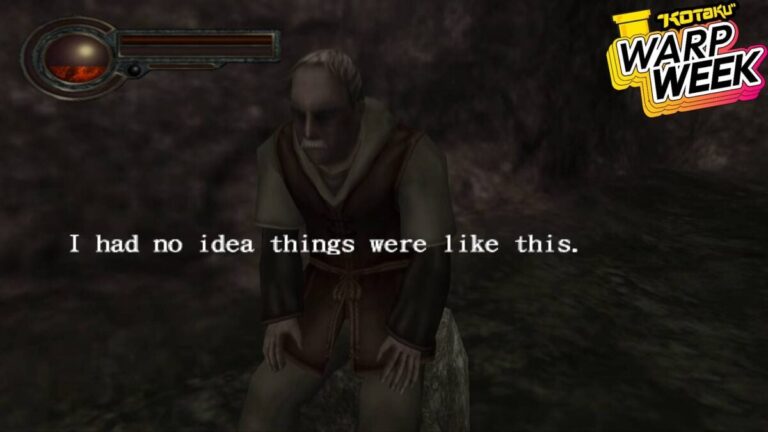
The introduction sequence of King’s Field: The Ancient City immediately signals FromSoftware’s commitment to atmospheric presentation. The opening cutscene, complete with a striking guitar flourish and Gothic sensibilities, establishes a tone that persists throughout the experience. This opening sets expectations for a dark, foreboding adventure—one where players must navigate a dangerous world populated by mysterious NPCs and hostile creatures. The visual style and narrative framing wouldn’t feel out of place in Dark Souls, released seven years later.
Design Philosophy and Difficulty Framework
Environmental Hazards as Core Challenges
King’s Field: The Ancient City shares Dark Souls’ fundamental approach to difficulty through environmental design rather than simple stat inflation. The game populates its world with hazards that demand player attention and resource management. Poison, in particular, emerges as a recurring threat—not merely as a status effect, but as an environmental feature that shapes how players navigate specific areas. Poison lakes present especially challenging traversal puzzles, requiring players to cross narrow wooden planks that sink and shift as weight distributes across them. The game doesn’t telegraph these hazards kindly; players discover poison through failure as much as through exploration.
Merchant Economies and Resource Scarcity
NPC interactions in King’s Field: The Ancient City establish economic systems that would recur throughout FromSoftware’s later work. Merchants occupy central positions in the world, their shops serving as crucial resource hubs. The game introduces consequences to transactional decisions—players who sell items at unfavorable rates face regret, finding themselves forced to repurchase goods at inflated costs. This creates tension between immediate needs and long-term planning, a design principle that extends to inventory management and equipment choices throughout the adventure.
Combat Pacing and Deliberate Action
Encounters in King’s Field: The Ancient City move with methodical pacing. Weapon strikes land slowly; enemies respond with measured aggression rather than frantic rushes. This deliberateness stands in stark contrast to faster action games of the PS2 era, establishing FromSoftware’s preference for combat that rewards positioning, timing, and patience. A wooden club—often the player’s earliest weapon—demands multiple strikes to dispatch even basic plant monsters. Ten hours of gameplay might only yield eight confirmed kills in early sections, underscoring how resource-intensive every encounter becomes.

Technical Challenges and PS2 Limitations
King’s Field: The Ancient City suffers from the technical constraints that defined PS2-era 3D games. Camera controls feel unwieldy by modern standards, creating situations where players struggle to maintain visual orientation during crucial moments. Hit detection can feel arbitrary, with environmental collisions sometimes proving more lethal than intended enemy encounters. A few steps forward might trigger invisible hazards—sudden patches of lava or unstable ground—that punish exploration without warning. These technical rough edges don’t feel intentional as design elements; rather, they represent the gap between FromSoftware’s ambitions and what the hardware could deliver.
The game’s camera particularly undermines traversal challenges. Narrow wooden planks crossing poison lakes become exercises in frustration when the camera refuses to cooperate. Awkwardly-spaced platforming obstacles that might pose moderate difficulty with responsive controls become genuine obstacles when the player must also battle against the camera system itself. Yet FromSoftware would eventually master environmental design tight enough that such technical limitations became less disruptive—a lesson that carried forward into the refined level design of Dark Souls.
The Path From Ancient City to Lordran
Difficulty Through Design, Not Cruelty
What connects King’s Field: The Ancient City to Dark Souls isn’t arbitrary difficulty, but rather intentional design that demands player adaptation. The poison swamp sequence encapsulates this philosophy perfectly. Rather than simply increasing enemy damage or introducing instant-death hazards, FromSoftware creates environmental conditions that force different tactical approaches. Poison forces players to manage resources differently, discover alternative paths, or find healing sources before proceeding. This represents difficulty as a puzzle to solve rather than a wall to batter through.
Atmosphere Over Spectacle
Both King’s Field: The Ancient City and Dark Souls establish their respective worlds through exploration and discovery rather than exposition. NPCs provide cryptic dialogue; story elements require players to piece together narratives from item descriptions and environmental clues. The opening invocation about an idol that stares into darkness sets tone and stakes without spelling out explicit objectives. This trust in player intelligence and willingness to explore marked FromSoftware’s commitment to a particular artistic vision—one that would define their success through the Souls franchise.
Legacy and Modern Recognition
King’s Field: The Ancient City remains relatively obscure outside dedicated FromSoftware archaeologists, overshadowed by the commercial dominance of Dark Souls and Elden Ring. Yet its existence illuminates FromSoftware’s design consistency. The studio didn’t suddenly invent their approach with Dark Souls; rather, they refined ideas that had gestated across the King’s Field series. The methodical pacing, environmental hazards, NPC economies, and Gothic atmosphere all find their roots in these earlier works.
For modern players encountering King’s Field: The Ancient City, the experience proves illuminating but challenging. The PS2 technical limitations feel more pronounced now than they might have in 2002. Camera frustrations and sluggish controls undermine exploration. Yet beneath these rough edges lies unmistakable FromSoftware DNA—the philosophical approach to difficulty, world design, and player agency that would eventually revolutionize gaming.
King’s Field: The Ancient City deserves recognition not as a forgotten masterpiece (it possesses genuine flaws), but as an essential stepping stone in FromSoftware’s journey. It demonstrates how constraints and technical limitations forced creative problem-solving, and how those solutions directly influenced one of gaming’s most important franchises.
Frequently Asked Questions
What is King's Field: The Ancient City?
King's Field: The Ancient City is the fourth game in FromSoftware's King's Field series, released for PlayStation 2. It preceded Dark Souls and established many design philosophies that would define the Souls franchise, including methodical combat pacing and environmental hazards like poison.
How long does it take to play through King's Field: The Ancient City?
The game demands significant time investment; early progression can span multiple hours before defeating even a handful of enemies. Extended play sessions reveal the game's difficulty structure, particularly in hazardous sections like poison swamps that require careful navigation.
How does King's Field: The Ancient City relate to Dark Souls?
King's Field: The Ancient City represents a direct precursor to Dark Souls, sharing FromSoftware's approach to difficulty through environmental design, NPC economies with merchants, cryptic storytelling, and deliberate combat pacing rather than stats-based difficulty scaling.
