
Key takeaways
- Sonic Team spent years in trial-and-error to figure out how to make fast 3D Sonic gameplay fun, with no industry reference games to guide them.
- Sonic Adventure 2 proved significantly easier to develop after the original's grueling experience, benefiting from both foundational knowledge and a U.S.-based team structure.
- Both Sonic Adventure and Sonic Frontiers faced similar challenges creating fun gameplay without predetermined player paths, yet both became acclaimed successes despite their difficult productions.
Three key figures from Sega’s Sonic Team spoke with Continue magazine in Japan about the difficulties of bringing the franchise into the third dimension. Takashi Iizuka, the current head of Sonic Team, Kazayuki Hoshino, and Jun Senoue, the series’ composer and sound director, reflected on nearly four decades of the franchise as part of discussions marking Sonic the Hedgehog’s 35th anniversary. Their conversation revealed that the transition to 3D proved far more grueling than many might assume, with the original Sonic Adventure standing out as the most challenging title to develop across the entire series’ history.
The 3D Gamble
Green Hill Zone in Three Dimensions
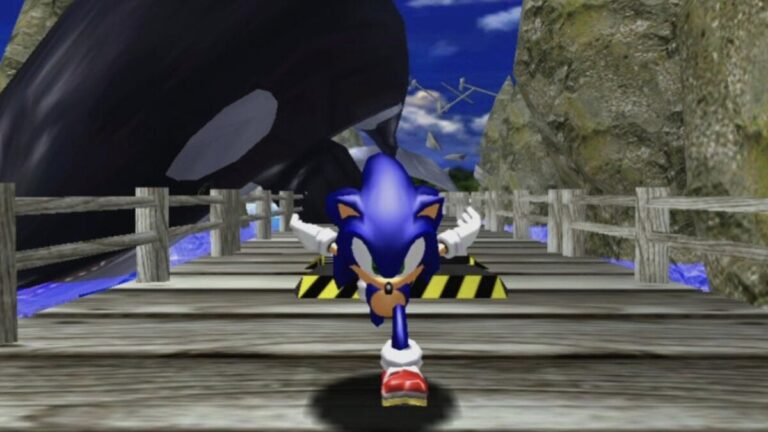
The core challenge of Sonic Adventure stemmed from uncharted territory. When Iizuka and his team first attempted to recreate Green Hill Zone in 3D, they quickly discovered that simply translating the running mechanics from the 2D games would not work. “Just running around that wasn’t fun,” Iizuka explained. “We just didn’t know how to make it more interesting, so we ended up doing a lot of trial and error all the way through development.” The team faced an additional complication: no comparable 3D games existed that moved at the speed Sonic demanded. “There weren’t any similar 3D games where you ran like this, so we didn’t know the answers either,” Iizuka said. This absence of precedent forced developers to solve problems without any industry reference point to guide them.
The Workload
Senoue recalled the project’s scope as unprecedented in his experience. Development began in 1997, and the volume of work exceeded anything the composer had previously encountered. Beyond the core gameplay redesign, the team constructed six separate character stories, added the Chao and Chao Garden system as a full subsystem, composed field music, and implemented voice acting, a practice entirely unfamiliar to the Japanese developer at the time. “Having to manage everything was quite challenging,” Senoue said. The combination of these elements created a workload that tested the entire studio’s capacity, as they were simultaneously solving fundamental design problems and executing production at an unprecedented scale.
Adventure 2’s Reprieve
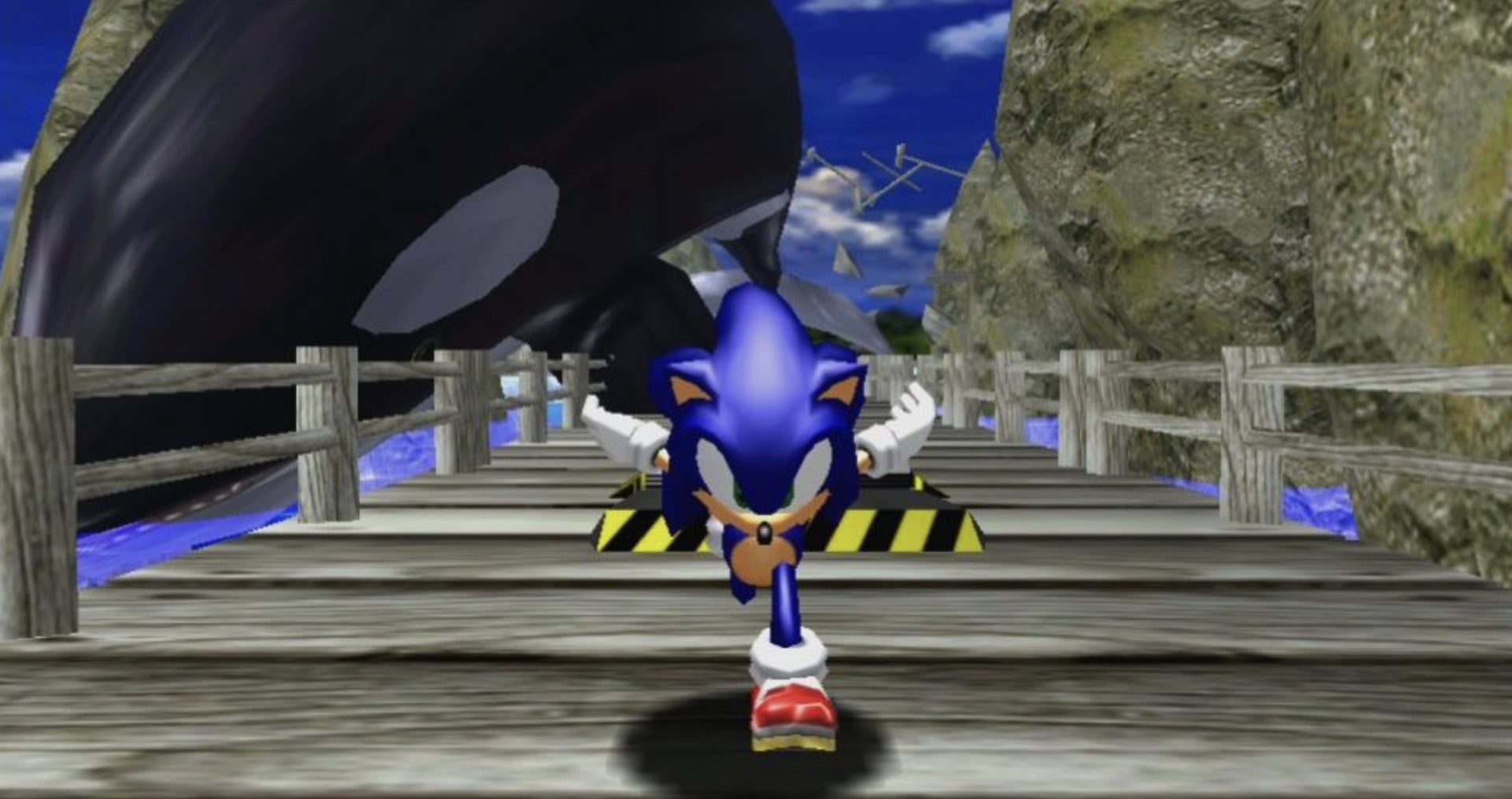
Sonic Adventure 2 presented a notably different development experience. The sequel was built by a team stationed in the United States, mirroring the approach used for Sonic the Hedgehog 2 and 3 decades earlier. This geographic shift and organizational structure enabled smoother development, with Iizuka acknowledging that “Sonic Adventure 2 was a lot more enjoyable.” The U.S.-based team’s working conditions facilitated the creation of City Escape and other iconic sequences that became hallmarks of the sequel. By the time developers tackled the second adventure game, they possessed the foundational knowledge gained from the original’s grueling development cycle, allowing for more efficient execution and creative iteration.
Frontiers’ Open World Problem
The Open Expanse Challenge
Years later, Sonic Frontiers would present Iizuka with echoes of Sonic Adventure’s fundamental problem. “One of the biggest challenges came with Sonic Frontiers,” he said. The core concept of running through a vast open world was established quickly, but translating it into engaging gameplay proved complex. Unlike every previous Sonic game, which funneled players through designed paths, Frontiers offered a sprawling space with no predetermined route. “All the previous Sonic games had a path you could follow. If you created a path for the player, you could easily create a fast and fun game. But with Sonic Frontiers, you were creating a game with a huge space and no single path to follow.”
Development Without Answers
The team entered Frontiers production without solutions, much as they had with Sonic Adventure. “We started that project without any answers on how to make this space exciting, which was in some ways similar to Sonic Adventure,” Iizuka reflected. “We were looking for answers while we were making the game.” The breakthrough did not arrive until roughly halfway through development, extending the project’s overall difficulty. Despite this extended challenge, Frontiers succeeded commercially and critically, joining Adventure as one of the series’ more celebrated entries.
Sonic Generations and the Music Problem
Composing Across Decades
Senoue identified another arduous project: Sonic Generations’ score. Composing music for a game that revisited the franchise’s entire 20-year history at that point required navigating the styles and sensibilities of multiple eras while maintaining cohesion. The resulting work proved both critically and commercially acclaimed, demonstrating that technical difficulty in production does not necessarily predict audience rejection.
The Success Pattern
A clear pattern emerged from the Sonic Team discussion: the franchise’s most celebrated titles were also its most demanding to create. Sonic Adventure, Sonic Adventure 2, Sonic Frontiers, and Sonic Generations all tested the team’s problem-solving abilities in different ways. Sonic Adventure and Sonic Frontiers specifically shared the burden of discovering design principles without precedent, with Adventure tackling 3D Sonic gameplay and Frontiers tackling open-world Sonic gameplay. Yet both remain among the series’ most fondly remembered entries by fans. The paradox suggests that the constraints and unknowns that made these projects difficult also forced creative decisions that ultimately defined what made them memorable.
Source: Kotaku
Frequently Asked Questions
Why did Sonic Team find Sonic Adventure so difficult to develop?
The team was attempting to bring Sonic into 3D for the first time without any reference games or established design principles. They had to undergo years of trial and error to figure out how to make running at Sonic's signature speed engaging in three dimensions.
How did Sonic Adventure 2's development differ from the original?
Sonic Adventure 2 was developed more smoothly by a team based in the United States, similar to how Sonic the Hedgehog 2 and 3 were made. This structure and the knowledge gained from the original Adventure allowed the sequel to be developed more enjoyably and efficiently.
Which other Sonic games presented major development challenges?
Sonic Frontiers and Sonic Generations both posed significant difficulties. Frontiers faced the challenge of making fast gameplay engaging in an open world without predetermined paths, which took until halfway through development to solve. Generations required composing music that unified the franchise's entire history while maintaining cohesion.
