
Key takeaways
- Shuhei Yoshida argues Sony should keep PS5 running longer instead of launching next-generation hardware, citing consumer budgets and lack of developer demand for more power.
- The PS5 lacks hardware failures that historically forced upgrades—unlike PS2's laser problems, PS3's storage limits, and PS4's thermal issues—removing natural pressure to replace it.
- If next-generation consoles cost over $1,000, Yoshida suggests manufacturers might need subscription financing models similar to smartphones, charging $50 monthly or $300-400 yearly.
- Nintendo's success with the original Switch shows that exciting features matter more than processing power when driving console adoption.
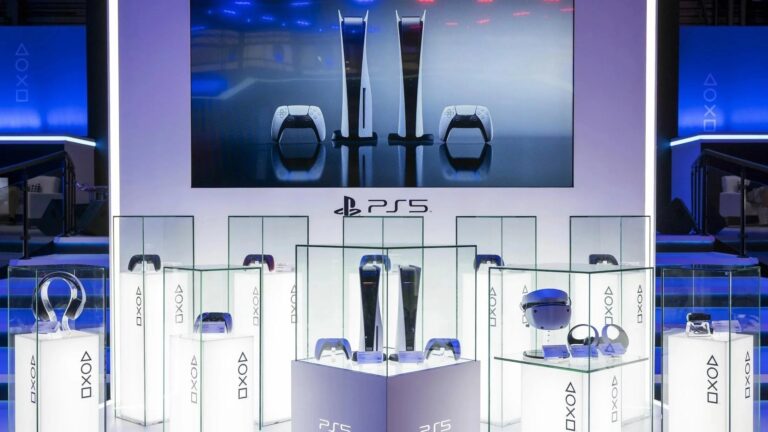
The PlayStation 5 stands in its sixth year on the market with no clear sign of losing relevance, and according to Shuhei Yoshida, a former PlayStation executive who spent decades shaping the company’s hardware and software strategy, Sony would be wise to keep the console around as long as market conditions allow. In a recent interview with The Verge, Yoshida argued for extending the current generation rather than rushing toward a next-generation system—a stance grounded in the realities of consumer budgets, hardware reliability, and the actual capabilities that modern games require to thrive.
Yoshida’s Case for Holding the Line
Yoshida told The Verge that Sony and Nintendo have already sold sufficient numbers of their current-generation hardware, so the limiting factor is no longer raw sales volume. The real constraint comes from the rising cost of goods themselves, and both companies are likely weighing whether to push back their next-generation launches in response to these economic pressures. His recommendation was direct: try to keep the current generation running as long as possible because doing so aligns with what players actually want. “I think people are very happy using PS5 and Switch 2,” Yoshida said, noting that consumer budgets are finite and hardware costs have climbed substantially relative to other forms of entertainment.
The broader logic is straightforward. With PC components and console hardware rising sharply in price, players who already own a PS5, Switch 2, or capable PC will probably remain satisfied with what they have rather than rushing to replace perfectly functional systems. Yoshida observed little appetite among the general public for an immediate generational shift. Beyond that, he suggested developers are not demanding better hardware to realize their creative visions. “I don’t think lots of people are asking for ‘more power, we need more power,’” Yoshida said. “Or even developers. I don’t think developers are asking for better hardware like that. So, I think, that means the current generation, Sony and Nintendo, are going to do pretty well for many years to come.”
Why the PS5 Avoids Its Predecessors’ Pitfalls
The Failures That Forced Earlier Upgrades
The path to the PS5 was paved with hardware failures that eventually compelled players toward newer systems, creating a natural cycle of replacement and generational advancement. The original PlayStation 2 suffered from widespread laser failures as the console aged, leaving players with malfunctioning machines and limited repair options. The PlayStation 3 launched with storage so limited that players quickly faced capacity pressures while managing their growing libraries. By the time the PlayStation 4 era neared its end, the console’s cooling system had become notoriously loud—fans spinning at maximum speeds to manage heat, turning gameplay sessions into something approaching a wind tunnel experience in the player’s living room.
Each of these issues created what amounted to a forcing function: a hardware problem that degraded the user experience enough to justify the cost of upgrading to a new generation.
The PS5’s Unexpected Durability
The PlayStation 5 has avoided these categories of failure entirely. There is no equivalent hardware defect threatening the installed base with obsolescence. No storage crisis forces players to delete games to make room for new titles. No thermal management problem degrades performance over time or signals the machine is approaching the end of its practical lifespan. This absence of a forcing function removes much of the natural pressure that historically drove console generational transitions. Players with a functioning PS5 have little practical reason to upgrade in the near term, especially given the financial realities surrounding hardware affordability that Yoshida outlined.
Hardware Costs Have Fundamentally Broken Upgrade Economics
Yoshida emphasized that the price trajectory of PC and console components has outpaced inflation in nearly every other category of consumer entertainment or electronics. Gaming PCs have become substantially more expensive than they were a generation ago. Console hardware at the premium end costs significantly more than it did several years prior. When the PlayStation 5 Pro itself commands a premium price point, and when speculation about next-generation consoles suggests prices potentially exceeding $1,000, the financial math becomes uncomfortable for consumers already stretched thin by housing costs, food prices, utilities, and other essential expenses.
The result is a bifurcated market reality: players with existing systems see little practical reason to upgrade, while potential new entrants face a formidable barrier to entry. Yoshida’s point cuts beyond simple price sensitivity about individual transactions. He argued that people with systems like the PS5, Switch 2, or good enough PCs will be content to play games on them—not out of brand loyalty or sentimental attachment to existing hardware, but out of economic necessity. There is no feature gap compelling enough to justify the cost, and the hardware reliability issues that used to create natural upgrade cycles no longer exist to push players forward.
The Subscription Model as a Possible Path Forward
If next-generation hardware does launch above $1,000, Yoshida proposed that companies like Sony might need to embrace a financing model borrowed directly from the smartphone industry. Under such a model, console hardware could ship bundled with required services—perhaps costing $300 to $400 yearly as a subscription, or roughly $50 per month spread across a contractual period. This approach would lower the upfront cost barrier to individual consumers while building recurring revenue for manufacturers and creating a more predictable financial model for long-term hardware support.
Yoshida’s proposal reflects a fundamental shift in how console gaming is financed and how the industry has historically related to its audience. Spreading costs over time through subscription services could make the transition more palatable to ordinary players, though it would require manufacturers to rethink their traditional business models.
What Would Actually Drive Adoption
The real test for any next-generation console will not be raw processing power, frame rates, or impressive technical specifications on a marketing sheet. It will be whether the hardware offers features that excite players enough to justify the upgrade expense, rather than relying on exclusive games designed to pressure players away from the current generation through fear of missing out on new content.
Nintendo’s original Switch proved this point conclusively. The hardware was not the most powerful console of its time, yet it attracted enormous audiences and sustained itself with an exceptional library of games that justified owning the hardware. By the time a new PlayStation or Xbox launches, player backlogs on current systems will likely be even larger than today. Millions of games sit unplayed across installed consoles worldwide. The question becomes whether a new console offers compelling reasons to exist beyond asking players to repurchase titles they already own on slightly faster hardware or to chase exclusives they worry will vanish without an upgrade.
For now, Yoshida’s logic appears sound: the PS5 generation has years of productive life remaining ahead of it, developers are not clamoring for more power, and players see no urgent reason to spend significant money on a replacement.
Source: Kotaku
Frequently Asked Questions
Why does Shuhei Yoshida think Sony should extend the PS5 generation?
Yoshida believes people are satisfied with the PS5, have finite budgets, and hardware costs have increased significantly relative to other entertainment. He argues developers are not asking for more power, making an extended generation both viable and desirable.
What hardware failures made previous PlayStation players want to upgrade?
The PS2 suffered from widespread laser failures, the PS3 had severely limited storage that created capacity issues, and the PS4 became notoriously loud from thermal management problems. The PS5 has none of these issues.
How would $1,000 next-generation consoles be made affordable?
Yoshida suggested subscription financing models borrowed from the smartphone industry, bundling hardware with services at $300 to $400 yearly or approximately $50 monthly, spreading the cost over time.
