
Key takeaways
- Micron CEO Sanjay Mehrotra predicts demand will exceed supply through 2028, with greater market tightness than 2026.
- The company abandoned the consumer RAM market in December 2025, shifting focus entirely to enterprise clients buying memory for AI infrastructure.
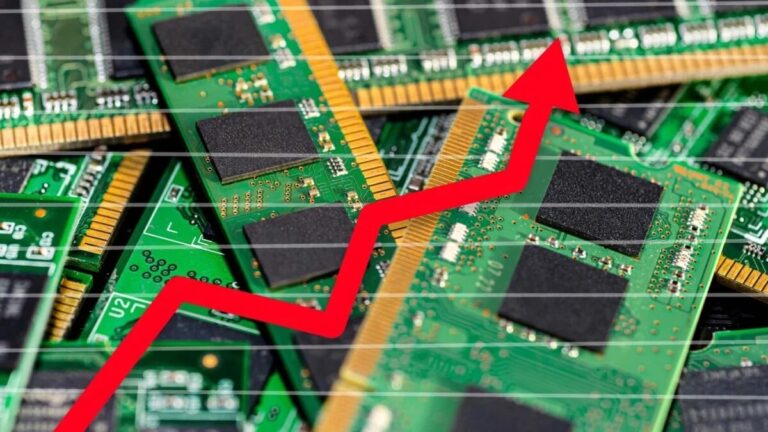
- Memory prices have climbed as much as 500 percent in the past year, with further increases expected through 2027 and 2028.
- Clean room manufacturing constraints mean new capacity cannot come online quickly enough to ease consumer shortages until 2029 at the earliest.
Micron Technology stands at the center of the semiconductor industry’s current transformation, and the memory manufacturer is delivering record profits as proof. The company reported quarterly revenue of $54.2 billion, representing a 379 percent increase year-over-year, alongside net income of $38.4 billion. The company’s stock price has surged 500 percent over the past 12 months, reflecting investor confidence in continued growth.
Behind these numbers lies an uncomfortable reality for PC gamers, system builders, and anyone planning a computer upgrade: Micron’s executives see the memory shortage intensifying, not easing, through at least 2028.
During an investor call this week, Micron CEO Sanjay Mehrotra outlined a supply-demand landscape that favors manufacturers over consumers. “In calendar 2027 as well as 2028, we see demand exceeding supply,” he stated. The CEO went further, asserting that the industry will experience “greater tightness in 2027 and in 2028 versus 2026.” In practical terms, this means less inventory available, fewer negotiating options for buyers, and continued upward pressure on pricing.
The Enterprise Boom Reshapes Memory Markets
The AI infrastructure buildout has fundamentally altered the memory market dynamics. Data center operators competing to deploy AI capabilities have committed massive capital to acquiring the latest high-bandwidth memory chips. These enterprise customers possess budgets that dwarf consumer spending, creating an entirely different competitive environment.
Pricing Power Shifts to Enterprise Buyers
Micron’s pricing strategy reflects the dominance of enterprise demand. The company negotiated 2026 HBM prices with customers during 2025, locking in rates that already represented significant increases from prior years. For 2027, Mehrotra revealed that “a large part of the volume is already sold out for 2027 for HBM, and the prices are much higher than 2026 prices.” This tiered pricing structure means early commitments secured lower rates, while any remaining supply commands premium pricing. New customers or those seeking additional capacity for 2027 face a significantly elevated cost structure.
Record Profitability from AI Demand
The revenue growth Micron reported reflects both higher volumes and these escalating prices. The company’s production facilities have been transformed into specialized suppliers for the AI infrastructure market, with enterprise clients accounting for the vast majority of output. This strategic realignment fundamentally changes the competitive landscape for memory products that eventually trickle down to consumer markets.
Manufacturing Constraints Lock in Years of Shortage
The shortage cannot be quickly resolved through aggressive production increases. Semiconductors require manufacturing facilities of extreme precision, and scaling up production involves technical and logistical barriers that no amount of capital can easily overcome.
Mehrotra explained the constraints: “Clean rooms take a long while to build. Even after they are built, even after first wafer output, production ramps up only gradually in the clean rooms. That’s just the nature of what it takes to bring up production.” A clean room is the sterile environment where semiconductor fabrication occurs, and constructing these facilities requires years of planning, construction, and equipment installation. Once operational, ramping production to full capacity is a gradual process, not an overnight achievement.
Micron is investing in capacity expansion to address current demand, but these efforts will not materially improve consumer availability until 2029 at the earliest. The company faces a ceiling on how quickly new production can come online, regardless of financial resources dedicated to the effort. This constraint is structural, not financial, which means throwing money at the problem yields diminishing returns.
Consumer Market Exit Narrows Retail Options
In December 2025, Micron announced a strategic shift: the company was exiting the consumer RAM market. This decision meant Micron would no longer manufacture memory products intended for retail channels and direct consumer sales. Instead, the company would concentrate entirely on serving enterprise clients with premium, high-capacity solutions.
Supplier Consolidation Reduces Competition
Other major memory manufacturers have followed a similar path. As supply chains narrow and the most profitable segments of the market concentrate on enterprise customers, the retail consumer market has become starved of competitive options. This reduction in supplier diversity naturally leads to higher prices for remaining stock and limited negotiating power for buyers.
Pricing Spikes Hit Consumers Hardest
The pricing impact has been severe. Over the past year, memory prices have climbed as much as 500 percent in certain product categories. A consumer purchasing DDR4 or DDR5 memory today pays substantially more than equivalent products sold two years ago. For those building gaming PCs or upgrading productivity machines, the cost of memory components has become a significant budget item.
Impact on Gaming and PC Enthusiasts
PC builders and gaming enthusiasts face a challenging purchasing environment. The combination of supply scarcity and elevated pricing means that building a new system costs considerably more than it would have in 2023 or 2024. A mid-range gaming PC requiring 32GB of memory now costs more to outfit than comparable systems from previous years, not due to advances in performance or capacity, but purely due to pricing pressure.
The shift toward enterprise-only manufacturing also means fewer product options. With Micron focused exclusively on high-end enterprise solutions, consumer-grade alternatives have consolidated among remaining suppliers, reducing competition and innovation in that segment.
For anyone postponing a PC upgrade, waiting until 2029 may eventually yield better pricing, but it comes with opportunity costs. Gaming, software, and productivity standards continue to advance, and delaying upgrades means missing out on improved performance and newer capabilities.
Outlook Through 2029
Micron’s profit forecasts and supply predictions suggest that the next three years will be defined by high memory prices and limited consumer access to new inventory. The company is not predicting a crisis or catastrophe, but rather a prolonged period of favorable market conditions for memory manufacturers and unfavorable conditions for buyers.
Gamers and builders seeking to upgrade should understand that relief is not imminent. Whether to purchase now at elevated prices or delay in hopes of future relief depends on individual circumstances, but the choice must be made with the understanding that neither option improves the fundamental situation: memory will remain expensive and scarce until at least 2029.
Source: Kotaku
Frequently Asked Questions
When does Micron predict the RAM shortage will end?
Micron CEO Sanjay Mehrotra indicated that demand will exceed supply through 2028, with no meaningful relief expected before 2029 at the earliest.
Why can't Micron increase production faster to address the shortage?
Clean rooms take years to build, and even after construction is complete and production begins, ramping up to full capacity happens gradually due to the technical complexity of semiconductor manufacturing.
Why did Micron exit the consumer RAM market?
Micron abandoned the consumer market in December 2025 to focus exclusively on enterprise clients buying memory for AI infrastructure, where profit margins are higher.
