
Key takeaways
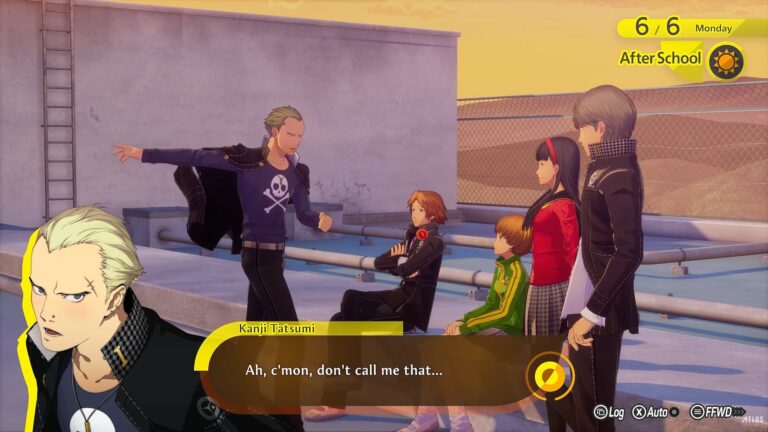
- Atlus confirmed Persona 4 Revival will keep Kanji and Naoto's controversial character arcs mostly unchanged from the 2008 original.
- The remake removes male symbol imagery and "men only" signage from Kanji's dungeon, potentially reducing the queer subtext of his story.
- Persona 4 Revival will not include romance options with male party members, despite a gay romance option being considered during development.
- Developer statements emphasize preserving character identities rather than rewriting problematic elements, frustrating fans who hoped for more inclusive storytelling.
Persona 4 has carried a complicated reputation within queer gaming communities since its 2008 release. Two of the game’s party members, Kanji Tatsumi and Naoto Shirogane, are written in ways that invite queer readings of their character arcs, yet their stories ultimately reject or sidestep any explicit acknowledgment of queerness as a valid part of their identities. As Persona 4 Revival approaches its February 2026 release, fans have hoped that Atlus might use the remake as an opportunity to correct these narrative missteps. However, the studio has confirmed that these storylines will remain largely unchanged, disappointing those who saw an opportunity for more inclusive storytelling.
Atlus on Keeping the Stories Intact
When asked about Kanji and Naoto’s character arcs during an interview with Ungeek, Atlus remained firm in its position. General Producer Kazuhisa Wada explained that the team views these stories as fundamentally sincere, despite their awkward handling of queer themes. “The story of Kanji and Naoto can seemingly be a little bit iffy at times, but if you look at it deeper, you’d understand that it’s a whole more sincere story,” Wada said. “So even back then and now, we can send these stories out with confidence. And I believe everyone will feel the same once they play it.”
Director Daisuke Yajima emphasized that the studio prioritized preserving the characters rather than reimagining them for contemporary sensibilities. “The characters of P4 are beloved by fans, so we didn’t want to change their own personalities and identities,” Yajima said. “We kept all those intact, and while doing so we wanted to make them more graphically beautiful.”
The developers did acknowledge gaps in the original storytelling. According to Yajima, some scenes lacked sufficient context or backstory to fully convey their intended meaning. “With these events, there were times where it seemed that we lacked a little bit of backstories, a little bit more detail,” he noted. “So within these parts, we added more details to support the story and address the lack of understanding.” The nature of these additions remains vague, leaving fans uncertain whether they address the queer subtext or reinforce the original conclusions.
Kanji’s Complicated Arc
The Original Story and Its Contradictions
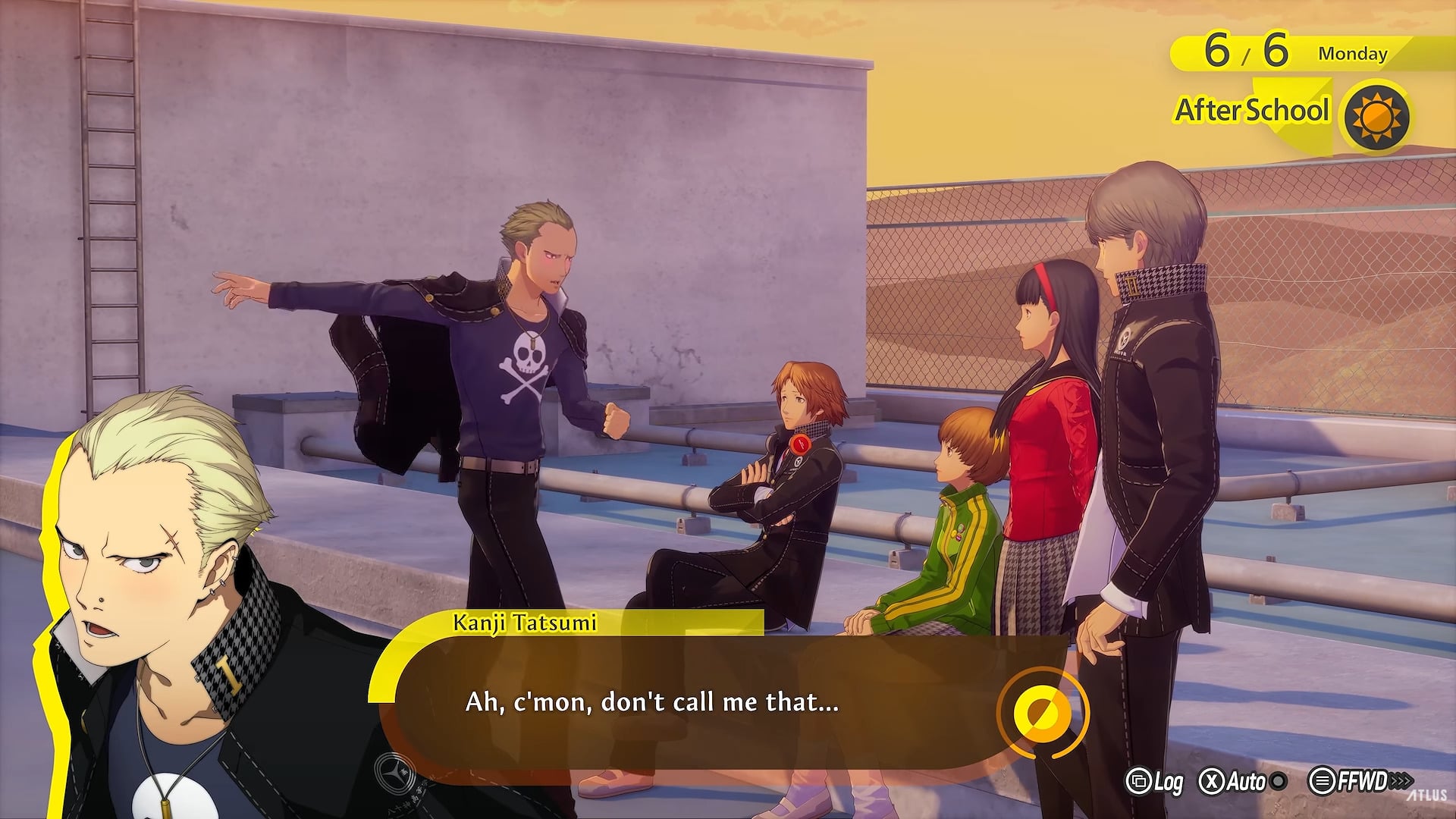
Kanji’s character arc in the original Persona 4 centers on a young man perceived as aggressive and tough by his peers but who harbors a love for traditionally feminine hobbies like knitting and cooking. On the surface, the story appears designed to critique toxic masculinity, the way society pressures men away from interests coded as feminine. This is a legitimate message, yet the arc carries additional weight that complicates this reading.
Kanji develops a romantic crush on fellow party member Naoto while believing Naoto to be male, and his dungeon, a psychological space reflecting his repressed thoughts, takes the form of a “steamy” men-only bathhouse. His shadow boss, manifesting his deepest insecurities, wields two male symbols. Throughout this arc, Kanji worries extensively about being perceived as gay by others. When his character story reaches its conclusion, he decides he isn’t queer; he simply enjoys knitting and has no romantic interest in men.
Many queer fans interpret this resolution as a last-minute retreat from acknowledging his bisexuality rather than a genuine exploration of masculinity norms. The dungeon’s homoerotic imagery, his romantic feelings for Naoto, and his anxiety about being perceived as gay all seem to point toward a character wrestling with queer identity. Instead, the game frames these elements as misunderstandings that dissolve once Kanji accepts his feminine hobbies.
Revival’s Alterations to the Dungeon
According to Vice, Persona 4 Revival has made alterations to Kanji’s dungeon that may actually lean away from queer readings rather than toward them. His shadow boss, which manifests from his repressed insecurities, previously wielded two male symbols. In the remake, this has been changed to display one male symbol and one female symbol instead. Additionally, the “men only” signage throughout his bathhouse-themed dungeon has been replaced with “unisex” markings.
These modifications could soften the queer subtext of Kanji’s story, as reducing male-centered imagery makes the final resolution feel less like a rejection of his identity and more like a simple misunderstanding about gender presentation. Whether this was an intentional effort to walk back queer coding or simply cosmetic updating for contemporary sensibilities remains unclear.
Naoto’s Transgender Readings
A Character in Hiding
Naoto’s storyline introduces a different but equally fraught dynamic. The character operates undercover as a boy while working as a detective, believing this disguise is necessary to be taken seriously in a male-dominated profession. When Naoto’s secret is revealed to the player, the game frames this moment as Naoto finally accepting her “true” femininity after living as a boy.
The Trans Reading and Its Evidence
However, Naoto’s arc contains elements that have led many queer fans to read the character as transgender rather than simply career-strategic. Naoto’s shadow self, the manifestation of repressed thoughts and desires, makes references to gender-affirming surgery, suggesting internal conflict about gender identity that goes beyond professional necessity. This reading persists within fan communities nearly 18 years after the game’s original release. Online discussions in 2026 still feature debates about whether Naoto’s true arc concerns accepting womanhood or accepting a queer gender identity.
The Evasion and Its Consequences
Like Kanji’s story, Naoto’s arc ultimately sidesteps any explicit queer framing, instead attributing the masculine presentation and discomfort with femininity to practical career concerns rather than identity exploration. For fans who see genuine transgender representation in Naoto’s storyline, this feels like Atlus writing around the issue rather than engaging with it directly.
Romance Options That Won’t Appear
Perhaps the most concrete disappointment for fans is the confirmation that Persona 4 Revival will not include romantic options with male party members, specifically Yosuke. This limitation is particularly noteworthy because a gay romance option was actually scrapped during the original game’s development. When Atlus began planning Revival, this option apparently returned to consideration before being ultimately rejected.
While the absence of same-sex romance in a 2008 game wasn’t unusual for the time, the fact that a gay option existed in early development before removal adds another layer to the conversation. For a 2026 remake, choosing to exclude the romance option feels especially cautious given how substantially gaming has shifted toward including diverse relationship options. Players can reasonably ask why, if the option was viable enough to consider during Revival’s development, it wasn’t included in the final product.
The Broader Pattern
The Persona series has long demonstrated discomfort with direct queer representation, and Persona 4 represents perhaps the most egregious example of this pattern. Characters whose narratives seem explicitly designed to engage with queer identity ultimately conclude that the queerness was a misreading, that social pressure, internalized shame, or simple confusion was mistaken for genuine orientation or gender identity. For queer fans, this reads less as nuance and more as evasion.
Persona 4 Revival’s approach confirms that Atlus remains uncomfortable fully committing to queer representation, even when given a remake opportunity to address fan concerns. The team’s insistence that the original stories are sincere despite widespread criticism, combined with changes that may actually reduce rather than address queer coding, indicates a studio unwilling to engage substantively with these critiques.
Frequently Asked Questions
What is Persona 4 Revival and when is it releasing?
Persona 4 Revival is a remake of the 2008 JRPG Persona 4, developed by Atlus and scheduled to release in February 2026. It features updated graphics and additional story context while maintaining the original narrative structure and character identities.
Why do fans criticize Kanji and Naoto's storylines?
Kanji's arc involves him developing romantic feelings for another male character while struggling with feminine interests, but ultimately concludes he isn't queer, just someone who likes knitting. Naoto's story similarly contains queer-coded elements including references to gender-affirming surgery, leading fans to read the character as transgender, but the official resolution treats the masculine presentation as simply a professional disguise, not a gender identity.
What changes has Atlus made to these storylines in Revival?
Atlus confirmed the core stories remain largely unchanged, with only minor contextual details added. Specific changes to Kanji's dungeon include replacing the male symbol imagery on his shadow boss with both male and female symbols, and replacing "men only" signs with "unisex" markings.
