
Key takeaways
- Jetpack Cat represents one of gaming’s longest development arcs, having been considered “too absurd” for Overwatch and shelved for nearly ten years before its 2026 realization.
- Jetpack Cat’s ability kit introduces several mechanics that fundamentally alter Support gameplay dynamics.
- Blizzard’s decision to launch five new heroes on a single date represents an aggressive content strategy designed to dramatically expand team composition possibilities.
- Competitive Overwatch communities on Reddit and gaming forums have begun analyzing Jetpack Cat’s potential impact, with discussions emphasizing her permanent flight as a game-altering mechanic.
Blizzard Entertainment is officially dropping the “2” from Overwatch’s title and simultaneously launching five new heroes on February 10, 2026, marking what the studio describes as a “huge turning point” for the franchise. Among these additions is Jetpack Cat—also known as Fika—a Support-class character equipped with permanent flight capabilities that community members are already calling potentially “the most transformative hero in the history of” the game. The rebranding and hero expansion arrive as Season 1: Conquest begins, signaling Blizzard’s commitment to evolving the game as a living universe rather than a static sequel.
A Decade-Long Journey from Canceled Concept to Playable Hero
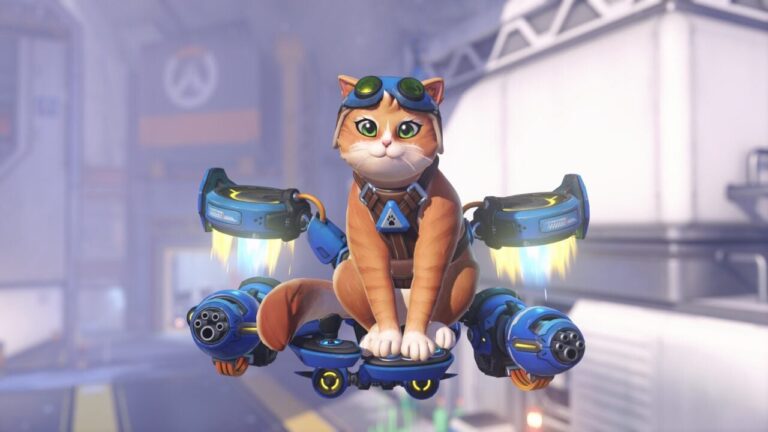
Jetpack Cat represents one of gaming’s longest development arcs, having been considered “too absurd” for Overwatch and shelved for nearly ten years before its 2026 realization. The character’s canonical origin story ties directly to the game’s existing lore: Brigitte discovered Fika as a stray cat at Watchpoint: Gibraltar and equipped her with a jet propulsion device created in her lab, transforming a whimsical concept into a mechanically coherent Support hero. This 49th hero addition becomes the third animal character in Overwatch’s roster, following Winston at launch and Wrecking Ball’s 2018 introduction, but Fika stands alone as the franchise’s first hero capable of permanent flight.
The character’s resurrection from development limbo reflects Blizzard’s willingness to embrace unconventional designs after years of iterative hero creation. Rather than treating the jetpack cat as a novelty, the studio invested in building her around mechanics that genuinely reshape Support-role gameplay. Her permanent flight—distinguished by the absence of a flight timer that constrains other aerial heroes—grants tactical advantages that extend far beyond cosmetic differentiation, allowing players to survey fights from elevated positions and reposition teammates with unprecedented freedom.
Innovative Mechanics Define a New Support Archetype
Jetpack Cat’s ability kit introduces several mechanics that fundamentally alter Support gameplay dynamics. Her primary fire, “Biotic Pawjectiles,” functions as a mid-range projectile that simultaneously heals allies and damages enemies, creating risk-reward decision-making around positioning and target prioritization. The “Lifeline” utility ability operates as a toggle mode enabling her to tow an ally through the air, granting tactical mobility that can transport teammates to high ground or execute map-control strategies previously unavailable to the Support class.
Her ultimate ability, “Catnapper,” dives to knock down enemies while tethering the nearest opponent, combining crowd control with engagement mechanics that reward aggressive positioning. These abilities collectively enable innovative tactical positioning impossible for traditional Support heroes, fundamentally shifting how teams coordinate around a Jetpack Cat player. The permanent flight passive eliminates decision-making around when to activate aerial movement, instead allowing constant repositioning that creates unique counter-play scenarios and forces opponents to develop new tactical responses.
Five Heroes Arriving Simultaneously Reshape the Competitive Landscape
Blizzard’s decision to launch five new heroes on a single date represents an aggressive content strategy designed to dramatically expand team composition possibilities. Alongside Jetpack Cat, the studio introduces Domina—a zone-control Tank with long-range precision capabilities—Emre, a fast-paced mobile DPS soldier with cybernetic modifications, Mizuki, a Support hero capable of throwing healing hats, and Anran, a fire-damage-dealing DPS character with self-resurrection mechanics. This simultaneous introduction creates a cascading effect across every role, forcing competitive teams and casual players alike to rapidly adapt their strategies and hero pools.
The staggered availability of these heroes begins February 5 with Anran entering trial mode, allowing the community two days of testing before the full roster launches. This phased rollout provides players early exposure to new mechanics while maintaining surprise elements for the official Season 1: Conquest debut. The coordination between hero releases and seasonal structure demonstrates Blizzard’s intent to use content drops as anchors for major gameplay shifts rather than incremental adjustments.
Community Already Recognizes Transformative Potential
Competitive Overwatch communities on Reddit and gaming forums have begun analyzing Jetpack Cat’s potential impact, with discussions emphasizing her permanent flight as a game-altering mechanic. Players note that the absence of a flight timer enables “messing around” in Quick Play while simultaneously creating novel counter-play scenarios, including emergent strategies like “Cat-copter” counters that didn’t exist in Overwatch’s previous hero roster. This early enthusiasm suggests the hero will generate sustained discussion and experimentation across both casual and competitive segments.
The transformative nature of permanent flight extends beyond individual hero balance, potentially reshaping how teams conceptualize Support positioning and engagement ranges. Traditional Support heroes operate within defined threat zones, but Jetpack Cat’s constant aerial presence forces teams to account for three-dimensional positioning in ways the game previously required only from limited-duration fliers. This mechanical shift ripples through team composition theory, map control strategy, and role specialization definitions that have stabilized over Overwatch’s multi-year lifespan.
Rebranding Signals Franchise Evolution Beyond Sequel Naming
The official removal of the “2” from Overwatch’s title carries symbolic weight extending beyond nomenclature. Blizzard stated that “Overwatch is more than just a digit: it’s a living universe that keeps growing,” positioning the rebranding as recognition that the franchise has evolved beyond its sequel identity into an ongoing, evolving ecosystem. This messaging aligns with live-service industry trends where continuous content updates and expansions have rendered traditional numbered sequels obsolete in favor of singular-title games that persist across multiple content seasons.
The rebranding arrives as Blizzard launches its most aggressive content push in years, with five heroes, a new season, platform expansion plans, and licensed collaborations all coordinating around the February 10 date. This convergence of rebranding, hero releases, and ecosystem announcements positions the title change as a genuine turning point rather than superficial marketing adjustment, signaling to players and investors that the studio views this period as marking renewed creative direction.
Platform Expansion and Licensed Partnerships Extend Reach
Beyond hero releases, Blizzard has announced a Nintendo Switch 2 version of Overwatch arriving alongside Season 2 in April 2026, marking significant platform expansion for the franchise. This port to next-generation Nintendo hardware extends the game’s accessibility to console players years after its initial console releases, potentially capturing audiences who prefer portable or hybrid gaming experiences. The timing coordinates with Season 2’s launch, suggesting Blizzard views the Switch 2 port as a major content pillar worthy of seasonal synchronization.
A Hello Kitty collaboration running for two weeks beginning February 10 adds licensed cosmetics to the live-service offering, strategically aligning with Jetpack Cat’s feline nature and the season’s “light chaos” thematic direction. This partnership demonstrates Blizzard’s willingness to pursue intellectual property collaborations that enhance the game’s aesthetic offerings while capitalizing on the cultural resonance of beloved licensed characters.
What Players Should Monitor Moving Forward
The competitive scene will rapidly reveal whether Jetpack Cat’s permanent flight fundamentally breaks Support role balance or integrates as a specialized alternative within the existing hero ecosystem. Early February 5 trial data from Anran will provide initial competitive community reactions, while the February 10 full launch will generate the first week of authentic ranked gameplay data. Players should monitor professional team compositions during Season 1: Conquest’s opening weeks, as competitive adoption patterns will signal whether these five heroes create meta shifts or remain experimental picks.
Blizzard’s rebranded Overwatch enters 2026 positioned as a franchise ready to embrace unconventional design philosophy while maintaining competitive integrity. The successful integration of Jetpack Cat and her four companion heroes will determine whether this “huge turning point” delivers meaningful long-term impact or represents a temporary content spike. The convergence of hero innovation, platform expansion, and rebranding creates a critical moment for the franchise’s trajectory across the next competitive season.
