
Key takeaways
- Masashi Kishimoto will write and illustrate Naruto: Shadow Rising, marking his first direct creative involvement with the franchise since the original manga's conclusion.
- The manga takes place approximately ten years before Boruto, a timeline confirmed by Sarada appearing as an infant in the announcement trailer.
- A four-part anime crossover titled Naruto x Ninkō was announced, introducing Western audiences to the manga series that Kishimoto identified as his primary creative inspiration.
- The first chapter arrives in 2027, with the narrative focusing on a period of renewed conflict between Naruto and Sasuke.
After supervising rather than directly creating Boruto, Masashi Kishimoto took the stage at New York Comic Con 2026 to announce his return to hands-on work in the Naruto franchise. The new project, titled Naruto: Shadow Rising, will mark a significant shift in his level of involvement. Unlike Boruto, where Kishimoto acted primarily in a supervisory capacity while artist Mikio Ikemoto handled both writing and illustration duties, Kishimoto will himself write and illustrate Shadow Rising. The announcement generated considerable excitement within the fanbase, who have long debated the artistic merits of Ikemoto’s work compared to Kishimoto’s style.
The Manga’s Temporal and Narrative Position
Positioned Between Two Eras
Shadow Rising occupies a chronological gap that fans have speculated about for years: the period between the end of the original Naruto manga and the beginning of Boruto. A trailer premiered at NYCC showing audiences their first concrete glimpses of this era. One character appearance in the trailer carries particular chronological significance. Sarada, the daughter of Sasuke, appears as an infant in the footage. Since Sarada is already eleven years old when Boruto begins, this visual placement establishes that Shadow Rising takes place roughly a decade before the sequel series starts.
Conflict and Continuity Questions
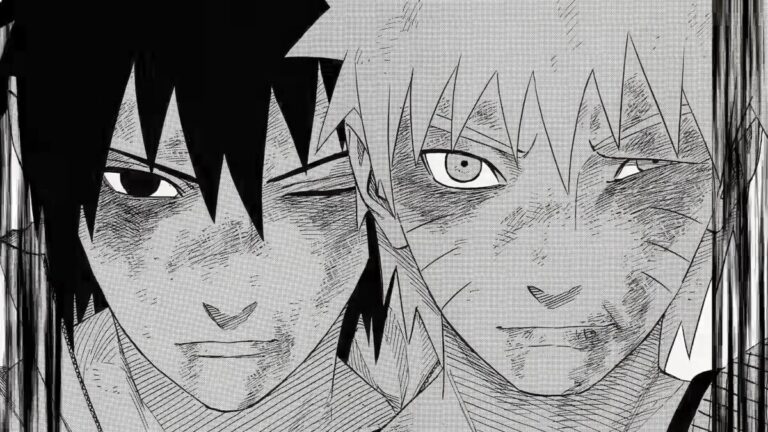
The timing raises immediate questions about character development and narrative continuity. The original Naruto concludes with Naruto and Sasuke finally resolving their long-standing rivalry, their childhood conflict ended. Boruto opens with the two established as close allies, their past animosity seemingly resolved into genuine friendship. Yet the Shadow Rising trailer includes a scene of Naruto and Sasuke engaged in combat once more. The official Naruto website made specific note of this renewed confrontation, though details about what drives their conflict in this interim period remain completely unknown.
When to Expect It
The first chapter is scheduled for 2027, providing the fanbase with months to theorize about the narrative before serialization begins. Kishimoto has offered no plot summaries, character details, or thematic hints beyond the visual confirmation of Sarada’s age and the reemergence of conflict between the two protagonists.
Kishimoto’s Role in the Franchise’s Recent History
Understanding the significance of Kishimoto’s involvement requires context about his work in Boruto. While Kishimoto created the original Naruto manga from its inception through conclusion, his relationship to Boruto differed substantially. He provided editorial supervision and creative direction, but Mikio Ikemoto served as the primary writer and artist. Among fans, this distinction matters considerably. Whether viewers favor or dislike Boruto, few would argue that Ikemoto’s artistic style matches Kishimoto’s in terms of technical precision or visual impact. The return of Kishimoto to both writing and drawing duties therefore carries weight for audiences invested in how the franchise’s visual presentation evolves.
The Ninkō Crossover Anime and Its Significance
Announced alongside Shadow Rising was a four-part anime miniseries titled Naruto x Ninkō, a project that immediately puzzled much of the Western anime community. Ninkō, despite its historical importance in Japan, remains largely unknown to English-speaking fans. According to Kotaku, Western viewers responded to the crossover announcement with confusion about the series’ identity and relevance. Many fans had to research or ask what Ninkō even was.
The connection between Naruto and Ninkō, however, runs deep in franchise history. Kishimoto has consistently identified Ninkō as the primary creative inspiration for Naruto’s development. Following the crossover announcement, he provided explicit clarification on this relationship: “I created Naruto because I personally wanted to see the continuation of Ninkō. I think many of you have already noticed, but Naruto was immensely influenced by Ninkō. Without Ninkō, Naruto would not exist.” This statement places Ninkō not as a minor influence but as foundational to Naruto’s entire conception.
Why Ninkō Never Reached Western Audiences
Ninkō is massive in Japan, yet it never successfully crossed over to Western markets. Multiple factors contributed to this limited reach. The English localization of the original 1995 Ninkō anime is now classified as lost media, never achieving wide distribution or mainstream availability in English-speaking regions. Without accessibility to the source material, combined with typical language barriers and limited promotion for older manga in English markets, generations of Western anime fans grew up entirely unaware of Ninkō’s existence, let alone its centrality to modern battle manga’s development. The franchise simply did not make the transition that later series like Dragon Ball or Bleach achieved.
Despite this gap in Western familiarity, Kishimoto’s enthusiasm for the crossover project appears genuine and personal rather than obligatory. His willingness to create content bridging these two properties suggests a desire to introduce English-speaking audiences to the work that fundamentally shaped his creative vision.
Looking Forward
Both Shadow Rising and the Ninkō crossover represent Kishimoto’s most direct involvement with the Naruto universe since his original manga concluded. For fans, Shadow Rising offers a chance to experience his current artistic and storytelling approach applied to the franchise’s pre-Boruto era, a period the original series largely left unexplored. The four-part Ninkō collaboration, meanwhile, functions as an unexpected homage to the creative source material that made modern Naruto possible. Neither project has confirmed exact dates beyond Shadow Rising’s 2027 start and the anime’s four-part format, leaving both fans and industry observers waiting for additional details.
Source: Kotaku
Frequently Asked Questions
What is Naruto: Shadow Rising?
Naruto: Shadow Rising is a new manga by Masashi Kishimoto set between the original Naruto series and Boruto. Kishimoto will both write and illustrate the series, with the first chapter arriving in 2027.
When does Shadow Rising take place in the Naruto timeline?
The manga is set approximately ten years before Boruto begins. This timeline is confirmed by Sarada appearing as an infant in the announcement trailer, since she is already eleven years old at the start of Boruto.
What is Ninkō and why does it matter to Naruto?
Ninkō is a manga series that Masashi Kishimoto identified as his primary creative inspiration for Naruto. Kishimoto stated that 'without Ninkō, Naruto would not exist.' A four-part anime crossover titled Naruto x Ninkō was announced to introduce Western audiences to the series.
