
Key takeaways
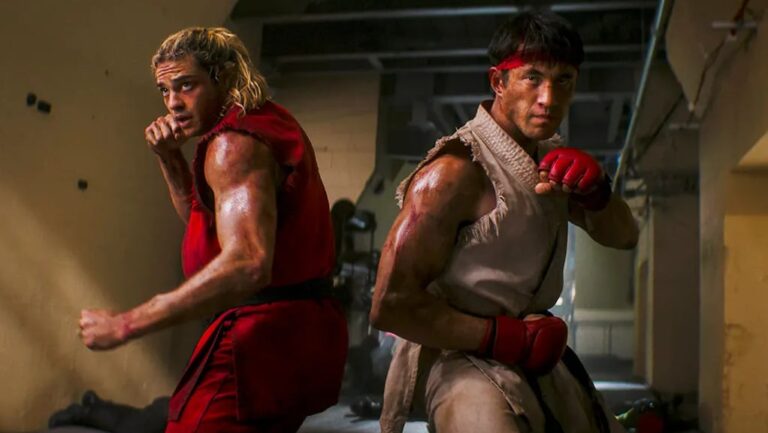
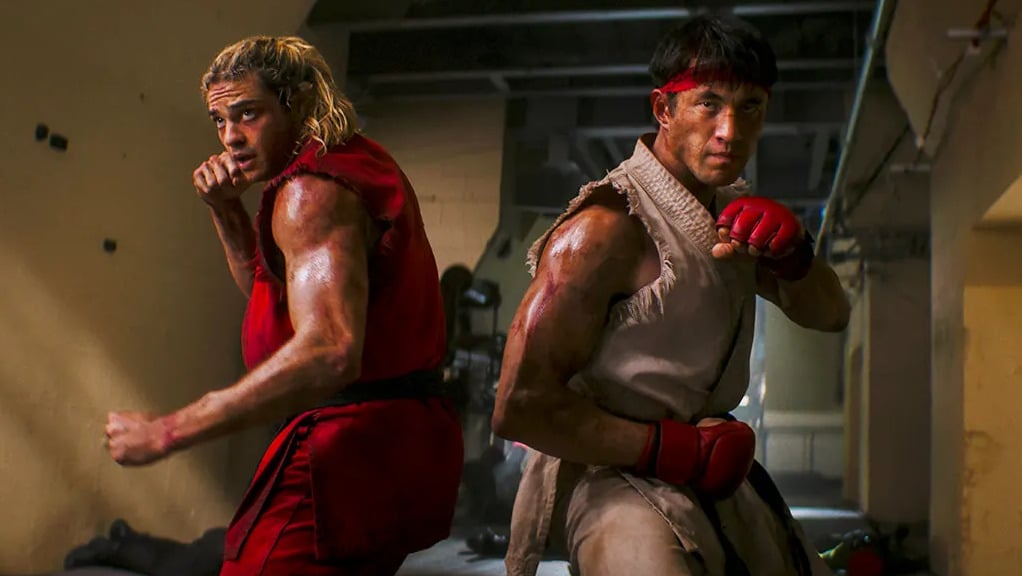
- The Street Fighter live-action film opened October 16 with a 41% Rotten Tomatoes score, featuring Noah Centineo as Ken, Andrew Koji as Ryu, and Callina Liang as Chun-Li.
- Critics widely panned the film's incoherent structure, abbreviated character arcs, and failed humor, though some praised David Dastmalchian's B-movie performance as M. Bison.
- The film contains multiple anachronisms, including 4 Non Blondes' 'What's Up' appearing in 1987 and a Taco Bell Gordita reference in 1993.
- A small contingent of reviewers found entertainment value in the film's relentless action and spectacle, though even they questioned whether it deserves a recommendation.
Capcom’s Street Fighter had already survived multiple cinematic attempts before this latest adaptation arrived in theaters. The 2024 live-action film opened October 16 with an eclectic cast assembled around a deliberately absurd premise, yet according to early critical coverage, the execution did not match the ambition. With Noah Centineo playing Ken Masters, Andrew Koji as Ryu, and Callina Liang in the role of Chun-Li, the film added Cody Rhodes as Guile and 50 Cent as Balrog. Director Kitao Sakurai, known for his work on the Eric Andre show, helmed the project, which even featured Eric André himself as ring announcer Don Sauvage. The result landed on Rotten Tomatoes with a 41 percent score, positioning it below even A Minecraft Movie and far from the critical rehabilitation that Mortal Kombat 2 achieved through its straightforward embrace of B-movie sensibilities.
The Critical Consensus
The film’s critical reception crystallized around a shared assessment of structural failure. Multiple reviewers described the adaptation as an “incoherent, irredeemable mess” and characterized it as “dumber than a box of rocks.” TheWrap singled out the film’s 1990s nostalgia aesthetic as anachronistic, arguing that it suffered from what the outlet called “cultural collapse.” Variety offered one of the more diplomatic critiques, limiting its praise to noting that dialogue was “often inaudible due to the thundering sound mix,” which framed poor audio design as perhaps the film’s least offensive quality.
Where the Narrative Breaks Down
Character arcs received consistent criticism for their abbreviated nature, compressed into a structure juggling too many competing plot threads. Reviewers noted the film attempts “to flit between one too many showdowns, tiring viewers out while confusing them on the movie’s priorities.” The pacing sacrificed coherence in favor of constantly moving to the next action sequence, leaving little room for the emotional beats that might anchor viewer investment in any single storyline. The second half proved particularly problematic, with one critic observing that “as the film becomes increasingly split between the tournament and M. Bison’s unraveling conspiracy, something goes terribly awry.”
Tonal Inconsistency and Failed Meta-Humor
The film’s attempts at self-aware comedy largely fell flat. One reviewer noted that the film deploys “knowing winks at the fans” about its own absurdity, yet these moments fail because the film “ever rose above the stuff it’s making fun of.” The movie seemed to assume audiences would laugh at 1990s cultural references simply by acknowledging how dated they were, rather than crafting humor that transcended the material. Characters like Chun-Li point out when other fighters are being ridiculous, but the film itself remains trapped in the same tropes it ostensibly mocks.
Production Issues and Technical Problems
Multiple reviews hinted at behind-the-scenes complications. Variety’s critic noted evidence of post-production rewrites, as dialogue increasingly appeared “with the backs of speakers’ heads or their mouths partially obscured,” making exchanges difficult to hear or follow. The “thundering sound mix” Variety mentioned suggests either mixing decisions that prioritized action sound design over dialogue clarity, or footage that was never properly re-recorded after script revisions. These technical choices raised questions about whether the film was rewritten after principal photography wrapped.
What Worked
David Dastmalchian’s Unhinged Villain
David Dastmalchian’s performance as M. Bison emerged as the singular bright spot in critical coverage. His portrayal drew praise as “a masterclass in B-movie camp,” with one reviewer describing a scene where Dastmalchian’s character brutally kills a scientist with clear relish, making “an expression that can be best described as orgasm face.” However, critics lamented that “nobody else in Street Fighter is anywhere close to operating on Dastmalchian’s level,” leaving his performance isolated within the broader film.
Combat Choreography and Spectacle
The fight sequences generated more defensible responses. Brandon Yu’s review credited the film’s “dedication to punchy pyrotechnics” that “feature the diverse personalities of its many fighters,” suggesting the action choreography achieves something resembling “the natural zenith of an arcade player’s imagination.” Rather than serving plot, these sequences operate as their own justification, delivering the visual spectacle one might expect from a franchise built on fighting game competition. The endless parade of matchups could frustrate viewers seeking narrative coherence, but they deliver what arcade players trained their expectations around.
Entertainment Despite Itself
IndieWire found value in the film’s refusal to bore its audience. The New York Times offered a more generous reading, suggesting the film resembled what “a kid who lost all their pocket change to Street Fighter in the arcade might begin to hallucinate in their dreams.” Christian Zilko’s review acknowledged that the film “overflows with convoluted plotting and confusingly engineered jokes,” but argued that “a film’s greatest sin is boring its audience, and this Street Fighter should take pride in never coming close to doing that.” By this metric, the film succeeds through sheer velocity and unpredictability, never allowing viewers to disengage regardless of whether they’re laughing with or at the material.
Historical Accuracy Was Never the Priority
The film’s approach to timeline accuracy proved as casual as its narrative structure. Ryu listens to “What’s Up” by 4 Non Blondes in the opening, set in 1987, despite the song not being released until 1993. When the story advances to 1993, Ken’s manager excitedly announces a Taco Bell Gordita tie-in, despite Taco Bell not adding the Gordita to its menu until several years later. These anachronisms could result from careless editing or from deliberate indifference to chronological detail that mirrors the film’s broader disregard for coherence.
Finding Value in Chaos
Some critics found themselves embracing the film’s incoherence as almost spiritual. William Bibbiani suggested that “watching Street Fighter is to exist outside time itself,” framing the film’s fundamental brokenness as transcendent rather than merely failed. Tom Jorgensen acknowledged that while director “Kitao Sakurai doesn’t always succeed in marshalling his enthusiastic cast and anarchic approach,” the film works when conceived as “landing as many punches as it can before the round timer hits zero.” Even Bill Bria, who found the film “highly watchable” and noted you could “convince yourself you’re having fun,” ultimately concluded its “aftertaste is so bitter and its center so hollow” that recommending it proved difficult.
The film’s appeal ultimately depends on what viewers expect from a Street Fighter adaptation. Those approaching it as pure spectacle divorced from narrative expectation may find the constant action sequences and performances like Dastmalchian’s worth the price of admission. Those expecting a coherent story or faithful translation of the game’s lore will find the 41 percent score reflects a fundamental mismatch between ambition and execution.
Source: Kotaku
Frequently Asked Questions
What is the Street Fighter movie's Rotten Tomatoes score?
The film opened with a 41% score on Rotten Tomatoes following its October 16 theatrical release.
Who plays the main characters in the Street Fighter film?
Noah Centineo plays Ken Masters, Andrew Koji portrays Ryu, and Callina Liang plays Chun-Li. David Dastmalchian takes the role of M. Bison.
Did any critics give the Street Fighter movie a positive review?
Some reviewers found merits in specific elements. IndieWire praised it for not being boring, The New York Times appreciated its arcade nostalgia aesthetic, and several critics highlighted David Dastmalchian's performance as a standout, though even positive reviews noted significant structural problems.
