
Key takeaways
- Gaming franchises dominate Spirit Halloween 2026 inventory, yet major properties like Mortal Kombat remain absent due to licensing costs or failed negotiations.
- Knockoff alternatives proliferate where licensed versions prove too expensive, leaving consumers with generic approximations of recognizable characters.
- Quality varies significantly in game-to-costume adaptations, with complex characters poorly translated while simplified designs strip away distinctive character details.
- Retail inventory adjusts based on real-time sales performance and licensing economics rather than franchise strength or consumer desire.
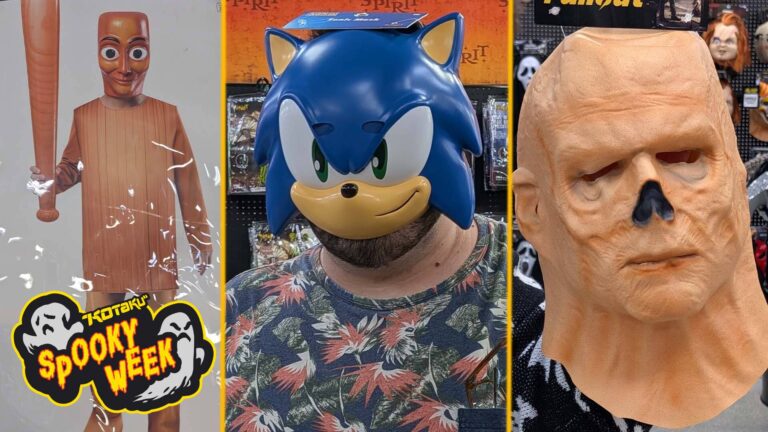
A late-October visit to a Spirit Halloween store reveals the complex, fractured state of gaming culture in mainstream American retail. According to Kotaku’s recent tour through the inventory, the store overflows with video game properties alongside licensing gaps, knockoff alternatives, and quality inconsistencies that showcase both gaming’s cultural dominance and the practical compromises required to transform games into wearable costumes. The 2026 shelves tell a story of what retailers can and cannot sell, which franchises command attention, and where cost-cutting creates openings for generic substitutes.
Nintendo’s Licensing Boundaries
Nintendo maintains a notably protective stance on which of its characters reach Spirit Halloween’s adult section.
The Absence of Sexy Nintendo Characters
The company notably declined to license adult versions of its flagship mascots. No official adult Peach costume appeared despite shelf space occupied by an unlicensed alternative, suggesting Nintendo views even generic “sexy” adaptations as incompatible with its brand positioning. This differs sharply from other entertainment properties that readily produce adult costume variants. The kids’ section, by contrast, offered officially branded Peach costumes alongside other Nintendo offerings, creating a gender-based divide in how Nintendo licenses its characters across age groups.
Luigi’s Unexpected Dominance
The adult section tilted heavily toward Luigi rather than Mario, an unusual skew that suggests either inventory imbalances or different demand patterns among adult costume buyers. The choice remains unexplained in Kotaku’s observations, but signals that even Nintendo’s most iconic character doesn’t automatically dominate shelf allocation. Meanwhile, Yoshi costumes appeared with questionable design choices that upset reviewers, suggesting poor translation of a simple character design into wearable form.
The Game-to-Costume Translation Problem
Video game characters face consistent challenges when adapted into physical costumes.
Animatronic Creatures and Physical Complexity
Five Nights at Freddy’s received one of the stronger adaptations: an actual animatronic version of a fictional animatronic stood out as convincing and well-executed. However, it failed to power on during Kotaku’s store visit around 7:30 p.m., rendering the technical centerpiece non-functional at a critical shopping moment. Chewbacca, while better than previous Spirit Halloween versions, still failed to capture the character convincingly, with the hard mask approach proving inadequate. These examples illustrate how games with complex character designs, creatures with elaborate details rather than humanoid characters, create genuine manufacturing difficulties.
Simplified Designs as Cost-Cutting
Pokemon costumes exemplified the simplified approach: reduced to onesies with hoods, they stripped away any distinctive character features, offering only generic animal outlines. This cost-saving design likely reflects manufacturing realities, but leaves consumers with costumes that could represent nearly any fictional creature rather than specific pocket monsters. Similar simplification appeared in other budget options, suggesting that lower price points inevitably mean lost visual specificity.
Horror Gaming in Mainstream Retail
Horror game properties occupy surprising retail real estate despite their niche appeal.
Retro Horror References
A purple Jason Voorhees inspired by his appearance in the infamous Friday the 13th NES game represents the kinds of deep-cut references that retail now accommodates. Yet Kotaku questioned how many people under 30 would even recognize or care about the NES variant, suggesting that retail fills shelf space based on available licenses rather than demographic relevance. The Jason costume arrived with specific color choices derived from aging game graphics, an oddly specific callback for mainstream retail.
The Backrooms and Internet Horror
The Backrooms, a more obscure creepypasta-style horror concept, appeared in only one form: a hazmat suit, suggesting limited retail penetration for internet-native horror properties. The choice of costume also felt incomplete. Kotaku wryly noted that a weird chair costume would have better captured the property’s unsettling aesthetic, indicating that retail adapts whatever is simplest to produce rather than most conceptually appropriate.
The Knockoff Ecosystem and Missing Franchises
The most striking absences reveal how licensing negotiations shape retail offerings.
Mortal Kombat’s Unexplained Absence
Mortal Kombat remains absent from Spirit Halloween shelves despite recent resurgence through theatrical films, Fortnite integration, and well-regarded games. According to Kotaku, instead of official costumes, generic ninja outfits occupied the expected space, suggesting either failed licensing negotiations or cost-prohibitive licensing fees. The observation raises broader questions about retail prioritization: major franchises with proven consumer engagement can still lose shelf space to generic alternatives based on licensing economics alone.
Call of Duty and the Knockoff Ghost Phenomenon
Call of Duty’s Ghost character appeared only as multiple unlicensed variants rather than branded costumes. Kotaku observed two essentially identical knockoff versions, suggesting generic military operators filled space where specific character licensing would cost more. Spider-Man similarly appeared in multiple unauthorized variants, with one unlicensed version standing alongside an officially licensed suit, creating direct side-by-side comparison of quality differences. Notably, “Ladypool” appeared as a labeled alternative, suggesting retailers now market gendered variants of the same superhero with specific branding.
Fortnite’s Declining Shelf Presence
Fortnite’s retail footprint shifted noticeably between 2025 and 2026. Kotaku observed a full wall dedicated to Fortnite costumes, yet noted fewer new additions compared to previous years and excess inventory still lingering as Halloween approached. The observation raises questions about whether the battle royale’s cultural moment has passed among younger consumers or whether the costume market has simply reached saturation. The presence of unsold inventory near the holiday signals reduced demand compared to the game’s peak retail penetration.
Poppy Playtime costumes similarly appeared in quantity, with Kotaku noting that while the property still occupied shelf space, it seemed to be selling down from earlier years. The contrast between Fortnite and Poppy Playtime, both still present yet both showing signs of declining velocity, suggests retail adjusts inventory based on real-time sales performance, not fixed franchise commitments.
The Mandatory Generic Wall and Retail Oddities
Kotaku noted that a wall of purely generic costumes appears mandatory in every Spirit Halloween location. This observation underscores retail economics: when licensed properties prove too expensive or unavailable, generic alternatives fill space. Generic swords referenced Game of Thrones, World of Warcraft, and Final Fantasy without specific branding, allowing retailers to stock props that multiple franchises could theoretically use. Similarly, generic costumes in categories like cop variants appeared in abundance, suggesting that categories matter more to manufacturers than specific intellectual properties.
Oogie Boogie’s controversial “greenification” illustrates how retail can reshape character perception. Kotaku explained that the character, traditionally brown or tan, now appears green in Spirit Halloween merchandise and Disney Dreamlight Valley, allegedly because the character glows under blacklight. The shift sparked genuine disagreement among consumers about whether greenification improves or diminishes the character, yet retail solved the debate by simply changing production runs. The decision demonstrates how retail manufacturing can subtly alter character identity across the consumer base.
What Spirit Halloween 2026 Reveals About Gaming Culture
The 2026 Spirit Halloween inventory functions as an index of which gaming properties maintain cultural momentum and which do not. Gaming franchises dominate shelf space, yet retail economics determine availability more than consumer demand. Licensing negotiations succeed for some properties while failing conspicuously for others, creating a patchwork of official products, knockoffs, and generic alternatives. The resulting store reflects not the gaming culture consumers inhabit, but rather the intersection of licensing feasibility, manufacturing constraints, and real-time sales velocity. That intersection rarely prioritizes fidelity to source material or specificity of character design. Instead, it yields whatever compromise retail can profitably sustain. Gaming culture’s pervasive presence in American retail masks fragmentation beneath: a market that reflects gaming’s cultural dominance while simultaneously diluting its integrity.
Source: Kotaku
Frequently Asked Questions
Why doesn't Spirit Halloween stock Mortal Kombat costumes despite the franchise's recent resurgence?
According to Kotaku's observations, Mortal Kombat costumes don't appear despite the franchise's recent films, Fortnite integration, and strong games. Generic ninja costumes occupy the space instead, suggesting licensing costs or failed negotiations prevent official options from reaching retail.
What quality issues did Kotaku identify with video game character costumes?
Five Nights at Freddy's animatronic looked convincing but failed to power on during the visit. Chewbacca fared better than previous versions but still fell short of the character design. Pokemon costumes were reduced to simple onesies with hoods, stripping away distinctive character details.
Which gaming properties are declining in retail presence at Spirit Halloween 2026?
Fortnite's wall contained fewer new additions in 2026 compared to previous years, with excess inventory remaining near Halloween. Poppy Playtime similarly showed signs of selling down from earlier years, suggesting both properties may be losing cultural momentum among younger consumers.
