
Key takeaways
- Kotaku found Sora's floaty jump mechanics make platforming in the 2002 Kingdom Hearts frustrating during a year-long series replay.
- Deep Jungle's layered level design compounds movement problems by requiring players to climb repeatedly after falling between vertical sections.
- Olympus Coliseum stands as the best early world, featuring a notably difficult Cloud Strife boss fight that left Kotaku without healing potions.
- Reader debate reflects divided opinions on whether Final Fantasy's shrinking presence diminished Kingdom Hearts' identity across the series.
Kingdom Hearts, the 2002 Square Enix PS2 action RPG, is proving mechanically dated during Kotaku’s ongoing year-long replay series called Guiding Key. While the game remains meaningful to those who grew up with it, the outlet discovered that its age manifests most sharply in movement and platforming systems that feel stiff and punishing by modern standards.
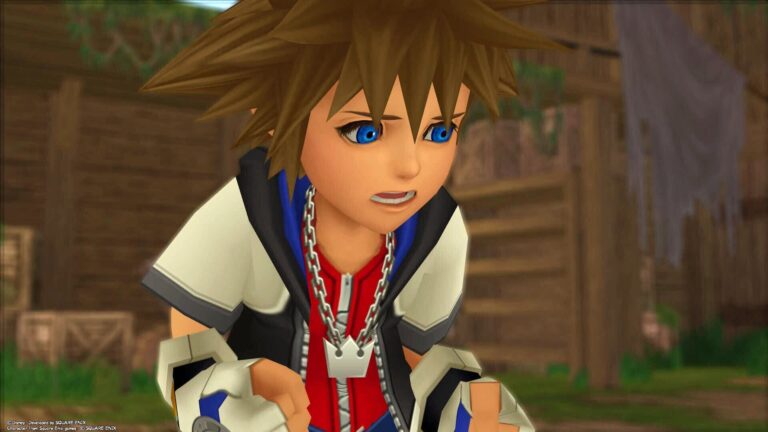
According to Kotaku’s experience, Sora’s jump physics represent the core frustration. The protagonist’s floaty, imprecise jump makes landing platforms a constant risk rather than a reliable action. This becomes most apparent in Deep Jungle, the Tarzan-inspired world where traversal relies on jumping between vines, grinding on jungle plants, and swinging across platforms. The mechanical frustration reached such intensity that Kotaku’s writer switched to a different game entirely, highlighting how the platformer elements clash with the rest of Kingdom Hearts’ scope.
What Kingdom Hearts Tried to Be
Ambition Across Multiple Genres
Kingdom Hearts balances action, RPG, space flight combat simulation, and platforming simultaneously. Square Enix’s scope was ambitious for 2002, but the execution reveals why certain elements aged poorly. The PS2 had many tight, responsive action games; Kingdom Hearts prioritizes floatiness over precision, making every jump feel like a gamble.
Disney and Final Fantasy Blending
The core crossover concept remains the series’ strongest asset. Kotaku noted that even small Disney worlds like Wonderland—which feels significantly smaller in replay than memory suggests—demonstrate Square Enix’s willingness to reinterpret source material creatively. Small worlds became laboratories for testing how Disney properties could mesh with Final Fantasy’s darker aesthetic.
Deep Jungle: Platforming as Punishment
Deep Jungle emerges as the most frustrating manifestation of Kingdom Hearts’ platforming problems. Kotaku describes falling from vines or missing platforms as a tedious cascade: each miss sends the player to a lower level with no immediate reset option. Getting back to the intended height requires grinding through the level again.
Deep Jungle’s structure of stacked platforms wasn’t unusual for PS2-era platformers, but combined with Sora’s imprecise jump, it creates a unique punishment system. The level’s portrayal of Tarzan’s villain Clayton as someone controlling the Heartless showcases something Kingdom Hearts did well: blending cheerful Disney worlds with Final Fantasy’s more serious fantasy tone. This conceptual blend remains intriguing regardless of technical failings.

Olympus Coliseum: A Standout Early World
The standout among early Disney locations is Olympus Coliseum. Despite containing only three rooms, the world makes efficient use of limited space by grounding itself in Hercules’ story. The Coliseum’s integration of Final Fantasy VII’s Cloud Strife creates one of the game’s most compelling crossovers.
The Cloud Strife Boss Fight
Cloud appears as a competitor in Philoctetes’ games, tasked by Hades to kill Hercules. Players must fight him as a boss encounter, and Kotaku found him to be one of the toughest fights in the game’s early progression. His bandaged Buster Sword, swift attacks, and superior mobility kept the fight tense throughout. Donald and Goofy were defeated quickly, leaving Kotaku alone for most of the engagement. Cloud fell only after a battle that consumed all healing potions.
The subsequent Cerberus fight, while more predictable, matched Cloud’s difficulty. These encounters demonstrate how Kingdom Hearts’ boss design could shine even within modest environmental scope, suggesting design limitations came from technical constraints rather than creative ones.
Final Fantasy’s Diminishing Presence
Kingdom Hearts’ inclusion of Final Fantasy characters has become less prominent across series entries, a shift that sparked extensive reader discussion on Kotaku’s coverage. Early appearances were substantial enough to shape player perception of the original game, though recent developer comments suggest these were partially intentional placeholders.
The declining role drives passionate responses from longtime fans. One reader argued that removing Final Fantasy content reduced the game’s fantasy atmosphere and uniqueness. The removal of Sephiroth as a boss fight in Kingdom Hearts III particularly stung fans who viewed Final Fantasy’s presence as integral to the series’ identity.
Other readers defended the original cameos more nuancedly, noting that while Final Fantasy characters never drove Kingdom Hearts’ narrative, their presence contributed to the game’s distinctive character. Final Fantasy X-2 characters Yuna, Rikku, and Paine later appeared as tiny pixies in Kingdom Hearts II rather than as full-sized allies, a change some felt diminished important characters. Requests to restore Final Fantasy’s importance remain consistent, with readers suggesting the series would benefit from meaningful representation rather than full world inclusions.
The Gummi Ship Divide
Kingdom Hearts’ Gummi Ship segments generated substantial reader commentary, revealing divided opinions on the mandatory space flight sections. These require building custom spacecraft before traveling between worlds, and reactions range from enjoyment of the ship builder to frustration with on-rails combat.
Some readers spent hours perfecting ship designs, finding the builder mechanic engaging independent of flight quality. Others dismissed the segments as pointless, noting that holding the attack button and moving minimally allows completion without strategy.
- Ship building attracted players who enjoyed construction independent of combat sequences
- On-rails combat required minimal input to succeed
- Later games improved building mechanics and made segments more skippable
- Kingdom Hearts II featured more dynamic level design than the original
Readers generally agreed that later entries handled Gummi Ships better. One reader noted irony in the first game having ship transformation mechanics that never returned, despite the original game benefiting least from such variety.
The Replay’s Central Challenge
Kotaku’s year-long Kingdom Hearts replay aims to revisit the series before Kingdom Hearts IV arrives approximately one year away. The early experience reveals the gap between memory and current reality: what felt special in 2002 now reads as ambitious but technically dated.
Kotaku found Kingdom Hearts more enjoyable to analyze conceptually than to actually play through, a conclusion that aligns with what returning players report. The earnestness of the crossover concept and world design may sustain engagement, but mechanical frustration pushes back against nostalgic goodwill. Whether improved familiarity with these mechanics will increase appreciation remains the central question for the remainder of the replay.
Source: Kotaku
Frequently Asked Questions
What is Guiding Key?
Guiding Key is Kotaku's year-long replay series of Kingdom Hearts games, launched to revisit the franchise before Kingdom Hearts IV arrives approximately one year away.
Why is Deep Jungle considered the most frustrating level?
Deep Jungle's layered platform structure means falling sends players to lower levels with no immediate reset, requiring reclimbing whenever jumps miss. This compounds Sora's imprecise platforming controls.
What made the Cloud Strife boss fight notable?
Cloud was one of the toughest fights in Kingdom Hearts' early progression, with swift attacks and superior mobility that left Kotaku's writer without healing potions after victory.
