
Key takeaways
- id Software lost roughly half its workforce just 24 hours before launching Doom: The Dark Ages, with leadership claiming the studio remains 'incredibly viable' despite the cuts.
- Veteran programmer Chris Hays contradicted management's optimism, stating that building AAA games with half the staff is 'impossible,' highlighting a gap between executive messaging and engineering reality.
- id Software is pursuing closer collaboration with MachineGames to share engineering resources for maintaining id Tech, introducing new dependencies for both Doom and the unannounced Wolfenstein 3.
- Microsoft has additional layoff rounds scheduled for November and January, leaving uncertainty about how many further cuts id Software might face.
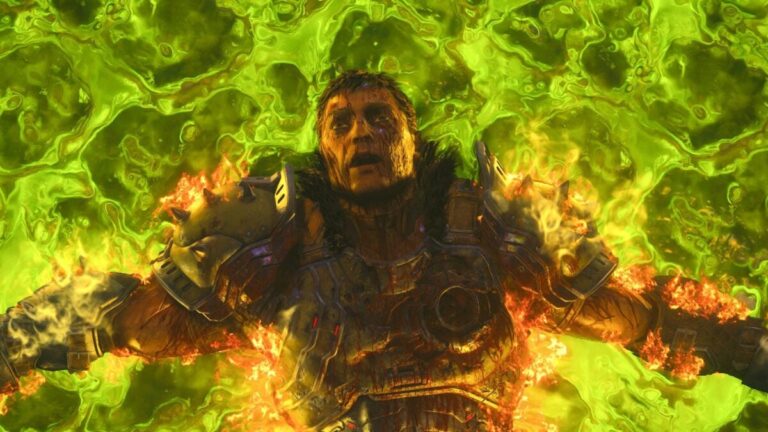
id Software’s recent workforce reduction removed roughly half the studio in a single round of cuts. The layoffs arrived just 24 hours before the studio shipped Doom: The Dark Ages, a major expansion that had been scheduled and promoted for months. The timing created an awkward collision: a planned product launch competed for attention with news that entire departments at the studio had been eliminated, scattering decades of accumulated professional experience.
Management’s Response
When Marty Stratton, the studio’s co-director, fielded questions about the layoffs at a press event this week, his tone prioritized reassurance over acknowledgment of disruption. “We’re doing great,” Stratton reportedly told media, according to IGN. “Not to handwave the [layoffs] away…everybody knows we had about half of our studio exit as part of that. But there was a very deliberate effort to make sure that we were incredibly viable coming out of that across everything we do, across game development and technology department.”
The statement represented a deliberate attempt to reframe the cuts within a context of strategic planning rather than crisis. Yet the message sat uneasily against assessments emerging from within the studio itself, where staff and observers offered substantially graver interpretations of the layoffs’ consequences.
The Engineer’s Reality Check
Chris Hays, a veteran programmer at id Software, offered a direct counterpoint to leadership’s optimism. Speaking in August after the layoffs took effect, Hays described the practical engineering challenge of reduced capacity. “It is hard to make a game that is AAA that’s like we’ve done before with half the people,” Hays said. “And by hard I mean impossible.”
His statement circulated widely in gaming discourse, functioning as a professional reality check against the public messaging from leadership. Hays spoke not from speculation or concern, but from direct experience working within the studio’s new structure and attempting to advance ongoing projects with dramatically reduced resources. The contradiction between Stratton’s “we’re doing great” and Hays’s “impossible” captured the tension between what leadership needed to communicate and what the engineering team was actually experiencing.
The 2016 Comparison
id Software’s leadership has grounded its reassurance in a historical benchmark designed to demonstrate that reduced headcount does not necessarily translate to reduced capacity. The studio has pointed out publicly that its current staff levels approximate where the organization stood in 2016 when Doom 2016 shipped, a successful AAA reboot that reset franchise expectations and established id Software as a competitive force in the FPS category.
The reasoning runs straightforward: if id Software delivered a major AAA title at that scale roughly a decade ago, there is no inherent reason why the studio cannot repeat that feat at comparable scale now. Stratton’s public statements operate within this framework, suggesting that leadership made deliberate choices about where to cut in order to preserve technical viability across critical functions.
Why the Comparison Falls Short
The 2016 analogy, however, obscures material shifts in how AAA game development operates. The industry landscape a decade later demands substantially more complex systems, higher graphical fidelity, and more extensive post-launch support and live-service infrastructure than developers required in 2016. A studio with the same headcount as it had in 2016 operates within a fundamentally more demanding environment, one that typically requires either more engineering resources or technological advantages the studio may not currently possess.
The distribution of cuts compounds the challenge. By multiple accounts, the layoffs did not spread evenly across the organization but instead targeted entire departments, effectively gutting specific teams and functions. That concentrated approach removes not just individual contributors but also the specialized expertise and institutional knowledge embedded in those departments. The result is a capability loss greater than raw headcount reduction might suggest.
The id Tech Question
The most concrete technical challenge facing id Software centers on id Tech, the proprietary game engine that powers the studio’s first-person shooters and represents the accumulated technical expertise of the organization. The engine is core to id Software’s competitive position within the FPS marketplace, and maintaining its development requires sustained engineering capacity.
With approximately half the engineering staff gone, managing id Tech has become considerably more challenging. The engine must be maintained in its current state, improved for upcoming projects, and evolved to remain competitive against industry-standard engines like Unreal Engine 5. A significantly reduced engineering team cannot realistically execute all three responsibilities simultaneously, particularly when some engineers must be diverted to new game development.
The MachineGames Partnership
Stratton revealed this week that id Software is pursuing deeper technical collaboration with MachineGames, the Bethesda-owned studio currently developing the unannounced Wolfenstein 3. MachineGames already uses its own fork of id Tech for development, positioning the two studios within a shared technological ecosystem. The partnership arrangement appears to involve pooling engineering resources across both studios to maintain id Tech rather than each studio maintaining its own fork independently.
“We’re working more closely with MachineGames than ever,” Stratton reportedly stated. “We’ve always had a very close partnership with them, but I think we’re at a point with technology development that both teams are incredibly talented and have incredibly talented engineers and we’re really on an amazing path that had started pre-[layoffs]. We’d kicked this off earlier this year. We’re really excited about that. We’re both really really bullish on what we have ahead.”
Theoretically, this approach would allow both Doom and Wolfenstein 3 to benefit from a larger aggregate engineering team than either studio could sustain independently, creating a shared pipeline for engine maintenance and advancement. The practical viability of that arrangement, however, depends on the effectiveness of coordination across two studios, two separate product roadmaps, and two sets of technical priorities.
The Trade-off: Dependency vs. Capacity
This partnership introduces a new form of structural risk for id Software. The studio loses direct unilateral control over the development and direction of its proprietary engine technology. Future decisions about id Tech’s evolution must now be negotiated across two studios operating within a shared ecosystem. While both operate under Bethesda and Microsoft ownership, which theoretically simplifies coordination, divided technical stewardship of core technology typically introduces friction that a unified engineering organization would not face. id Software’s freedom to advance the engine becomes contingent on MachineGames’ priorities and resource availability.
Uncertainty Ahead
Xbox’s restructuring remains incomplete. Microsoft has scheduled additional rounds of layoffs for November and January, meaning further reductions across the gaming division are still to come. It remains unclear whether id Software will face additional cuts, emerge relatively insulated from future rounds, or experience targeted reductions affecting specific engineering disciplines or experience levels.
What is certain is that the next major Doom release will originate from a studio substantially smaller than the one that shipped Doom 2016, operating within an industry that demands more from development resources than it did a decade ago, and dependent on partnership with another studio to maintain its foundational technology. Whether that configuration can sustain the kind of AAA experience players expect from the franchise depends ultimately on execution and the effectiveness of the MachineGames partnership, questions that only shipping products and market reception will definitively answer.
Source: Kotaku
Frequently Asked Questions
How many people did id Software lose in the layoffs?
Roughly half the studio's workforce was laid off, just 24 hours before the studio launched Doom: The Dark Ages expansion.
What did Marty Stratton say about the studio's future after the layoffs?
Stratton told media the studio was 'doing great' and that leadership made a 'very deliberate effort' to ensure id Software remained 'incredibly viable' across game development and technology after the cuts.
How will id Software maintain its proprietary engine with half the staff gone?
id Software is working more closely with MachineGames to coordinate engineering resources and maintain id Tech. Stratton said the partnership began earlier in 2026 and that both teams are committed to the engine's future.
