
Key takeaways
- Zeschuk blamed EA's private equity acquisition in August as the 'final nail in the coffin,' citing the fund's focus on sports and Battlefield over other genres.
- BioWare was financially stable in 2007; the EA acquisition was a strategic choice to fund Star Wars: The Old Republic, not a rescue from collapse.
- Leadership without development experience doesn't understand how games are made, leading to decisions that conflict with creative requirements.
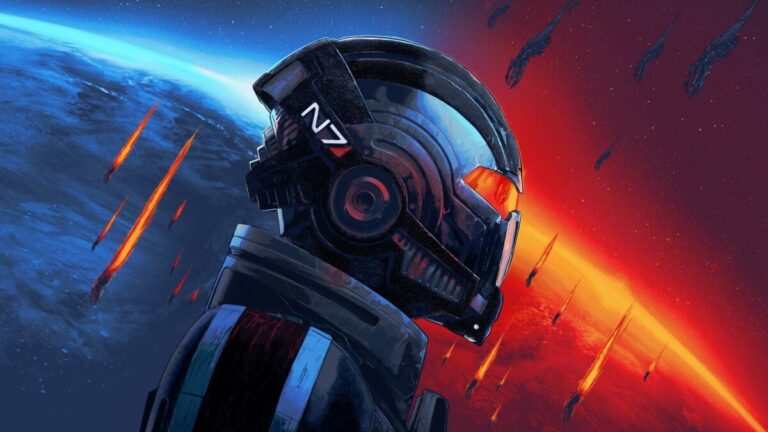
- Mass Effect continues in an Amazon TV series; fans campaign for game revival with petitions and billboards despite BioWare's closure.
For more than a decade, Greg Zeschuk maintained distance from the studio he co-founded. In 2012, he and Ray Muzyka stepped away from BioWare, the Edmonton developer they established in 1995, months after Mass Effect 3 shipped. That separation meant Zeschuk watched little of the studio’s journey under Electronic Arts. When BioWare shut its doors last week, over a decade of absence had already given him space to process the loss.
Speaking to 80.lv for the first time since the studio’s closure, Zeschuk reflected on the 2007 acquisition that brought BioWare into the EA fold and examined how the publisher’s new ownership structure accelerated the end. His perspective cuts through much of the industry mythology surrounding the deal and offers insight into how a once-revered development house reached its final chapter.
The Private Equity Deal as a Turning Point
Zeschuk identified a specific moment when BioWare’s fate became sealed: EA’s acquisition by Saudi Arabia’s Public Investment Fund, Silver Lake Partners, and Affinity Partners in August. He called this arrangement the “final nail in the coffin” for the studio.
The shift in ownership fundamentally changed what EA values. According to Zeschuk, the new owners’ priorities are sharply narrowed. Games outside sports franchises and the Battlefield military shooter now register as “extraneous” to the portfolio. BioWare, with its history of single-player and multiplayer RPGs, found itself misaligned with a fund run by decision-makers far removed from creative concerns.
That misalignment accelerated what might have been a slower decline. “I think EA is a completely different company than when we were acquired,” Zeschuk told 80.lv. The studio had navigated earlier challenges under EA’s traditional publisher structure. Against private equity owners whose primary interest lies in maximizing returns and shedding perceived liabilities, BioWare could not compete. Zeschuk has had to create an “emotional break” to avoid dwelling on decisions made 20 years earlier.
Disputing the Rescue Narrative
A persistent claim in industry discussions holds that BioWare stood on the brink of collapse before 2007, saved only by EA’s intervention. Zeschuk rejects that framing.
Financial Reality in 2007
The studio was not in financial distress, Zeschuk explained. BioWare was “in good shape” and carried genuine options for its future. The acquisition served a different strategic purpose: funding a massive multiplayer project. Star Wars: The Old Republic, under development at BioWare Austin, required capital beyond what an independent studio could easily secure. “We had options actually,” Zeschuk said. “We thought we chose the best option that was available to us at the time.”
A Deliberate Business Calculation
The decision reflected conventional wisdom about scale. BioWare’s leadership believed the studio would thrive as part of a larger publishing operation. That assumption held for years. The studio shipped games, including Mass Effect: Andromeda, which Zeschuk characterizes as a success within EA’s operational constraints, even if critics were less favorable. “The company had good possibilities going forward,” he told 80.lv, “but at the end of the day we felt, okay, we may be better as part of a bigger thing.”
Why Circumstances Changed
Two decades later, the fundamental calculus shifted entirely. A transition from corporate publisher to private equity fund transformed what once seemed like a smart partnership into a misalignment. The fund’s demand for predictable returns and its indifference to anything outside proven franchises left little room for the kind of experimental, long-development projects that defined BioWare’s identity.
Game Development and Business Leadership
One of Zeschuk’s sharpest observations concerns the people who now make decisions at major publishers. He points to a structural disconnect: executives climbing the business ladder rarely come from development backgrounds.
“The other harsh reality of almost all these companies, the people that go down the business track never really come from the development track,” Zeschuk explained to 80.lv. “Because none of these people have ever made a game, like, never really sat and made one, like, from start to finish, even a small thing, they just don’t know how it works.”
That knowledge gap proves fatal when private equity demands that complex creative endeavors return predictable quarterly profits. Someone who has shipped a single game understands the volatility and unpredictability inherent in development. Someone who has only managed spreadsheets and portfolio companies does not. The result is decision-making fundamentally divorced from the realities of game production.
Zeschuk Steps Away Permanently
The co-founder faces no regrets severe enough to drive him back into the industry. Zeschuk has mourned BioWare’s end emotionally long before its official closure. “I’ve kind of gone through all the emotions like long, long ago,” he told 80.lv. “You have to break from it and kind of go, ‘Okay, I’ve had my emotional moment.’”
Game development demands a cost in time, personal struggle, and sustained effort to maintain creative standards across production cycles. Having experienced that “crucible,” Zeschuk has no appetite for returning. “I’m happy being a consumer and playing games,” he said. “It’s just not [worth] the personal struggle and cost and effort required to make a great game.”
Even if he wanted to resurrect BioWare or create something new with Mass Effect, EA holds all relevant intellectual property. The publisher shows no sign of licensing its catalogue to independent creators. Instead, EA appears content to preserve franchises in suspended animation, generating revenue from adaptations while employing none of the people who created them.
A Franchise Living Beyond Its Studio
BioWare’s closure does not mean Mass Effect has disappeared entirely. Amazon Studios is developing a Mass Effect television adaptation, a project unaffected by the studio’s shutdown. EA continues earning licensing fees from the property while maintaining creative control.
The irony is not lost on BioWare’s remaining fans. Thousands have organized to keep the franchise alive in cultural memory, including billboard campaigns and a petition that surpassed 200,000 signatures. The grassroots effort reflects the gap between what players want—new Mass Effect games crafted with care—and what corporate owners are willing to provide.
For Zeschuk, the path forward requires protecting creative people. “Something like Mass Effect can’t be recreated with random people and AI,” he said, suggesting that future studio leadership needs hands-on development experience, not just business credentials. The industry’s current trajectory, shaped by financial engineering and shrinking tolerance for risk, offers no immediate solution to that problem.
Source: Kotaku
Frequently Asked Questions
When did Zeschuk and Muzyka leave BioWare?
They retired in 2012, just months after Mass Effect 3 launched. Zeschuk has not been involved with the studio for over 14 years.
Did BioWare need EA's help to survive in 2007?
No. Zeschuk says the studio was "in good shape" and had multiple options. EA's acquisition was chosen to fund Star Wars: The Old Republic at BioWare Austin, not to rescue a failing company.
What happened to Mass Effect after BioWare closed?
BioWare is gone, but Amazon Studios is developing a Mass Effect television series. Fans have organized campaigns with petitions exceeding 200,000 signatures and billboards to call for new games in the franchise.
