
Key takeaways
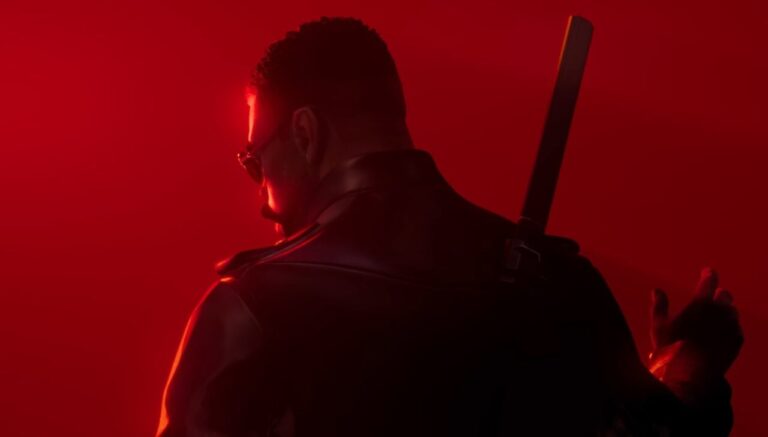
- Marvel’s Blade, the narrative-driven third-person action-adventure title in development at Arkane Lyon, has slipped from a late 2026 launch window to late 2027, with the project reportedly running over budget.
- Rather than outright closure, Microsoft is reportedly considering selling Arkane Studios alongside at least four other studios—including Undead Labs and Ninja Theory—as an alternative to shutting them down entirely.
- Arkane Studios was founded on October 1, 1999, in Lyon, France, by Raphaël Colantonio, establishing itself as an innovative force in immersive simulation design.
- The fate of Marvel’s Blade and Arkane Studios will likely become clearer in the coming quarters as Microsoft finalizes its restructuring plans.
Microsoft is weighing the sale or closure of Arkane Studios as Marvel’s Blade faces a significant delay and budget overruns, according to reporting from major industry outlets. The Lyon-based developer, acquired through ZeniMax Media’s $7.5 billion purchase by Microsoft in March 2021, now finds itself at the center of a cost-cutting initiative under new Xbox leadership. Arkane founder Raphaël Colantonio has publicly questioned the direction of the studio and its flagship Marvel project amid uncertainty about the company’s gaming strategy.
Marvel’s Blade Pushed Back, Budget Concerns Mount
Marvel’s Blade, the narrative-driven third-person action-adventure title in development at Arkane Lyon, has slipped from a late 2026 launch window to late 2027, with the project reportedly running over budget. The delay emerged in June 2026, just ahead of a major wave of layoffs across Xbox’s portfolio. The game entered full production at Arkane Lyon in late 2024, following its announcement in December 2023, but production challenges have forced a substantial schedule adjustment.
The budget overruns and timeline extension have prompted Xbox leadership to consider more drastic measures, including the potential cancellation of the title entirely. This marks a notable shift for a project that represents Arkane’s departure from its traditional first-person immersive sim formula, with Blade following protagonist Eric Brooks as he attempts to stave off a vampiric invasion in Paris. The game was designed to draw from comic mythology and establish an original narrative within the Marvel universe.
Potential Studio Sale Part of Broader Restructuring
Rather than outright closure, Microsoft is reportedly considering selling Arkane Studios alongside at least four other studios—including Undead Labs and Ninja Theory—as an alternative to shutting them down entirely. This represents part of Microsoft’s most aggressive cost-cutting initiative to date, with Xbox targeting at least five studios for potential divestment or closure. The strategy signals a fundamental shift in how the company manages its gaming portfolio under new leadership.
Arkane Studios currently employs approximately 150 people and has operated as a cornerstone of Microsoft’s gaming ambitions since the ZeniMax acquisition five years ago. The studio earned recognition for its work on the Dishonored franchise and Deathloop, establishing a reputation for creative, player-driven design. However, the studio’s recent history includes the May 2024 closure of its Austin location, which had developed Prey and the recently released Redfall, suggesting Microsoft’s willingness to consolidate or eliminate development teams.
Todd Howard Confirms Project Remains Active Despite Uncertainty
Todd Howard, head of Bethesda Softworks, offered a rare update on Marvel’s Blade’s status in an interview with Entertainment Weekly, stating he has seen “some stuff” recently and praising the Arkane team for their “outstanding work.” Howard confirmed the project is “still ongoing” despite its extended absence from Xbox’s public showcase lineup and mounting speculation about potential cancellation. His comments were designed to address fan concerns that the game had been quietly shelved following its lack of presence at the Xbox Games Showcase.
The confirmation from Howard carries weight given the leadership transition at the top of Xbox. Phil Spencer, who had served as Xbox CEO for years and guided the studio through its ZeniMax acquisition, announced his retirement in February 2026 after 38 years at Microsoft. Spencer’s replacement, Asha Sharma—formerly of Instacart and Meta—has signaled a strategic pivot toward fusing gaming ambitions with AI-driven consumer experiences, though she has committed to supporting core Xbox fans.
A Studio at Crossroads: Twenty-Five Years of Innovation Under Threat
Arkane Studios was founded on October 1, 1999, in Lyon, France, by Raphaël Colantonio, establishing itself as an innovative force in immersive simulation design. The studio’s quarter-century of operation has produced critically acclaimed titles that shaped industry conversations around player agency and narrative design. Now, the potential sale or closure of the studio would mark a significant departure from Microsoft’s 2021 strategy of aggressively acquiring major development talent.
The timing reflects broader industry consolidation trends, with the video game sector experiencing a record $161 billion in disclosed merger and acquisition deal value in 2025. However, Microsoft’s current approach differs sharply from this trend, as the company considers divesting studios rather than acquiring new ones amid cost pressures and strategic realignment.
Key Developments to Monitor in Coming Months
The fate of Marvel’s Blade and Arkane Studios will likely become clearer in the coming quarters as Microsoft finalizes its restructuring plans. Industry observers will watch for official announcements regarding the studio’s status, potential buyer interest from other publishers, or updates on the game’s development trajectory. Any decision will carry significant implications for the approximately 150 employees at Arkane Lyon and the broader conversation around Microsoft’s long-term gaming strategy.
The situation underscores the precarious position of even established, creatively respected studios within major corporate structures. As Microsoft navigates new leadership and cost pressures, the future of one of gaming’s most innovative development teams remains uncertain, with the stakes extending far beyond a single Marvel title.
