
Key takeaways
- Horror games reward well-timed exits rather than prolonged engagement, making short concentrated experiences ideally suited to the genre.
- Thirteen games ranging from 20 minutes to three hours offer everything from psychological mysteries to retro oddities, all playable entirely before Halloween.
- Seminal titles like Clock Tower and Inside remain influential touchstones, while recent games like Paratopic and Overdub continue pushing narrative and presentation boundaries.
- Several games use unconventional approaches including photographs, desktop interfaces, and Twine text adventures to generate dread through means impossible in traditional media.
With Halloween just days away, players who haven’t yet found their horror fix still have time to cram in something genuinely unsettling. Unlike many genres that demand dozens of hours for their payoff, horror games thrive on concentrated dread. The good news: you don’t need to hunt down the increasingly elusive P.T. to get your scares. A wealth of shorter experiences, ranging from 20-minute jolts to three-hour psychological spirals, offer genuine shudders without requiring a season-long commitment.
Psychological Terror Through Minimalism
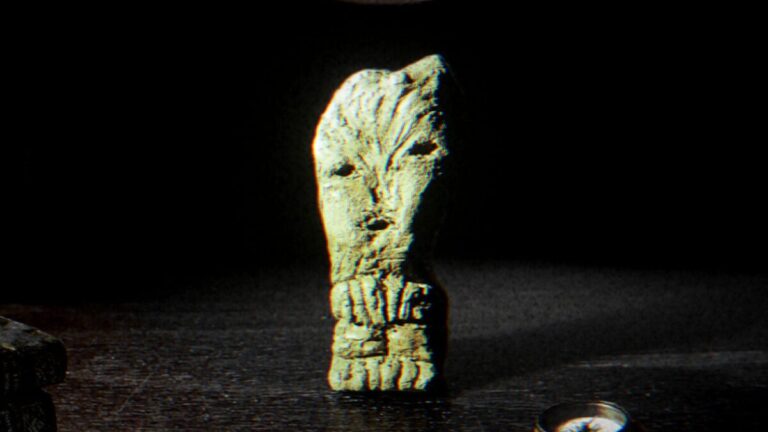
Balazs Ronyai’s Children of Clay proves that intimacy breeds unease. The game tasks you with examining an uncanny figurine within a dimly lit parlor, methodically consulting your notes to decode the relic’s mysteries while shadows creep steadily closer. This approach mirrors the atmosphere of M.R. James’ “A Warning to the Curious”—the horror of close study, of objects that reveal their wrongness only under prolonged attention. That compressed experience accomplishes psychological weight in mere minutes that sprawling games struggle to sustain across days.
Escalating Domestic Unease
Kitty Horrorshow’s Anatomy operates on a similar principle of escalating unease. You navigate an empty, darkened house accompanied only by white noise and old recordings, finding your spatial understanding twisted and subverted as the game itself seems to shake apart. The fear mechanism here emerges not from jump scares but from the space itself becoming unreliable—a distinctly video-game fear impossible to replicate in other media.
Supernatural Consequences of Desperation
Red Candle Games’ Devotion explores how disappointment transforms into superstition and supernatural terror. The game tracks the Du family’s descent within their apartment, beginning with the daughter’s entry into a singing contest that promised stardom. When that success never materializes, the household spirals into cult involvement, leaving their home psychically scarred by their desperation and spiritual searching. The game achieved critical acclaim before Steam pulled it following imagery perceived as critical of Xi Jinping, though Red Candle Games has since made the game available directly through their own website.
Narrative Experimentation and Perspective Play
Jessica Harvey’s Paratopic embraces the fractured narrative style of David Lynch’s “Lost Highway.” You inhabit three distinct perspectives: a hired killer, a smuggler, and a birdwatcher. Each experiences moments in real-time before your surroundings begin literally unraveling to reveal alarming creatures, cursed video tapes, and a conspiracy operating at the periphery of comprehension. The game received enough attention to warrant a remake/remix titled Overdub, which launched just last month, giving players both the chance to revisit the original and experience Harvey’s reimagined version.
Desktop Horror and Interface Dread
No Code, now operating under the name Screen Burn, pioneered interface-bound horror with their collection of desktop creepers. The standout “The House Abandon” presents as a retro text-adventure accessible from your desktop, but the game’s events begin bleeding into your computer room itself. This concept proved potent enough to warrant expansion into Stories Untold, a full anthology released in 2020 that explores other tales of dread occurring through computer screens.
Institutional Processing of the Surreal
Home Safety Hotline operates in similar territory. You staff a call center fielding reports from people experiencing unusual and deeply wrong circumstances at their locations. Like Papers, Please, it forces you to maintain professional distance while processing information that grows progressively more disturbing. The comparison to the kind of calls Art Bell fielded during late-night radio creates an appropriate tone: strange, potentially apocalyptic, but filtered through institutional bureaucracy.

Historical Horror and Retro Reinvention
Giallo Inspiration on Super Famicom
Before Resident Evil defined survival horror’s trajectory, the genre was heading in very different directions. Human Entertainment’s Clock Tower for the Super Famicom demonstrates one path left largely unexplored. Inspired by Dario Argento’s giallo cinema (specifically films like Phenomena and Deep Red), Clock Tower follows four orphans summoned to the Barrows estate with the promise of a new home. That promise proves catastrophically false, trapping them in a nightmare where they must survive encounters with the Scissorman while uncovering the estate’s secrets and attempting rescues of friends. The game has spawned numerous sequels of varying quality, but WayForward’s faithful 2024 remaster makes the classic accessible on modern hardware.
Ecstatica occupies similarly strange historical ground: a charmingly goofy medieval game where your absurdly oversized ellipsoid form battles werewolves and trolls while solving puzzles and fighting for survival. Its bizarre aesthetic and unrelenting difficulty make it a weird retro oddity, and both Ecstatica and its sequel are receiving modern ports releasing tomorrow.
Unconventional Approaches to Horror
Some games achieve dread through radically unusual presentation. An unnamed adventure game navigates you through photographs of a massive collection of dolls, dioramas, and dust. You pilot a drone through a labyrinth built by a boy to trap things lurking beneath his mattress. As the maze sprawls and grimy smudges accumulate, you begin suspecting the boy may have actually succeeded.
Yames’ underwater horror strips away genre conventions in favor of existential dread. Playing as a devoutly religious scientist attempting to fuse faith with scientific practice via deep-sea exploration, you search the ocean floor for angels. In the trench’s darkness, divinity confronts you in ways that force hard decisions about what you’re willing to sacrifice.
Horse Master, among the most acclaimed Twine games, begins as what it claims: a game about becoming a horse master. Initial pages promise equestrian simulation, but deeper interaction reveals conversations with the horse salesman becoming increasingly unhinged as the nature of mastery and agency opens wide.
Awaiting the Bigger Picture
Playdead’s influence on indie horror cannot be overstated, which explains why players remain eager for whatever the studio has developed over its decade-long silence. The original Inside follows a young boy through a nightmarish landscape of hostile locals, pale creatures, and disturbing mind control experiments. The game was frequently imitated but never rivaled, captivating players then while many continue analyzing its cryptic mysteries today.
Adam Robinson-Yu, creator of cozy-game success A Short Hike, offers The Annual Ghost Town Pumpkin Festival: up to 20 players enjoy pumpkin carving, haunted hay rides, and exploration. The meaningful twist: the game exists only once yearly, with servers shutting down when the season ends, creating genuine scarcity and seasonal ritual.
The Focused Fright That Lingers
Horror games thrive because not every experience needs to sprawl across months. The genre rewards precision, atmosphere, and knowing when to exit. With Halloween just days away, any of these titles delivers focused fright that lingers long after completion.
Frequently Asked Questions
How long do these horror games take to complete?
The games range from approximately 20-minute experiences to three-hour campaigns. Shorter titles like Children of Clay accomplish significant psychological impact in just minutes.
What happened to Devotion by Red Candle Games?
Devotion was initially pulled from Steam following imagery that was perceived as critical of Xi Jinping. The game was subsequently made available on the developer's official website.
Is WayForward's Clock Tower remaster the only modern way to play the original?
While Clock Tower has spawned numerous sequels of varying quality over the years, WayForward's 2024 remaster is the most straightforward way to experience Human Entertainment's original on modern hardware.
