
Key takeaways
- Sony stated that “creating a console is a roughly 4-year journey,” a timeline that supports expectations for a Holiday 2028 release window.
- The article’s premise of a digital-only PS6 faces direct opposition from former PlayStation leadership.
- Leaked specifications reveal that Project Helix will significantly outperform the PS6 on paper.
- Analysts estimate the PS6 will launch between $499 and $599, with some projections reaching $900, while Project Helix is expected to command $999 to $1,200.
Analyst David Gibson from Embracer Group has predicted a “high likelihood” that Sony’s PlayStation 6 will launch after 2028, potentially pushing into 2029, as the company extends the PS5’s lifecycle longer than previous console generations. The prediction conflicts sharply with hardware leaker KeplerL2’s claim that both the PS6 and Microsoft’s Project Helix are on track for a Holiday 2027 launch, creating significant uncertainty about the timeline for next-generation gaming hardware. Meanwhile, the question of whether the PS6 will ship as a fully digital console remains hotly contested among industry veterans and analysts alike.
The 2028 Launch Window Takes Shape
Sony stated that “creating a console is a roughly 4-year journey,” a timeline that supports expectations for a Holiday 2028 release window. This aligns with Microsoft’s own assessment that Sony will deliver the PS6 in 2028, roughly six years after the PS5 launched in 2020, following the industry’s typical 6-to-7-year console cycle. Gibson’s analysis suggests Sony is prioritizing an extended PS5 lifecycle over rushing to market with next-generation hardware.
However, insider reports indicate that both the PS6 and Project Helix have confirmed 2027 alpha development kits already distributed to studios, suggesting an aggressive holiday 2027 target remains possible. The discrepancy between analyst predictions and insider claims reveals genuine uncertainty in the market about whether supply chain constraints—particularly a critical “memory crisis” affecting GDDR7 availability—will force delays into late 2028 or 2029. Moore’s Law is Dead reported that Sony initially intended a late 2027 launch but that memory sourcing challenges make late 2028 or 2029 more realistic.
The Digital-Only Question Divides Industry Leadership
The article’s premise of a digital-only PS6 faces direct opposition from former PlayStation leadership. Shawn Layden, former PlayStation President, explicitly stated that “I don’t think Sony can get away with it now” regarding a disc-less launch, arguing that removing physical media would alienate too many customers given PlayStation’s massive global market share. Layden emphasized that while Xbox has found success with digital-only models, PlayStation’s strategy differs fundamentally due to its international reach and diverse player base.
Shuhei Yoshida, another former PlayStation boss, reinforced this position by declaring that a “fully digital PlayStation 6 simply doesn’t make sense for Sony right now” and that Sony is not ready to abandon disc support. Both executives stressed that the console will likely continue supporting physical media, with leaked information suggesting the PS6 base model may be “digital-first” to manage launch pricing while offering a detachable disc drive as an optional accessory—mirroring the PS5’s two-version approach rather than abandoning physical media entirely.
Project Helix Emerges as the Performance Leader
Leaked specifications reveal that Project Helix will significantly outperform the PS6 on paper. Microsoft’s console reportedly features 68 RDNA 5 compute units and 36-48 GB of GDDR7 RAM, compared to the PS6’s rumored 54 RDNA 5 compute units and 30-40 GB GDDR7 RAM. Both systems use custom AMD Zen 6 and RDNA 5 silicon, but Helix is positioned as a “premium hybrid Xbox and PC pitch” with substantially higher performance targets.
The performance gap translates to dramatic differences in real-world capability. Project Helix is expected to deliver 5-6 times the rasterization performance of the Xbox Series X and 20 times the ray tracing capability, whereas the PS6 is rumored to achieve approximately 3 times the PS5’s rasterization performance. This performance advantage stems partly from Helix’s larger die size of 408 square millimeters versus the PS6’s 280 square millimeters, despite the PS6 using TSMC’s newer 2-nanometer process compared to Helix’s 3-nanometer fabrication.
Pricing Strategy and Market Positioning
Analysts estimate the PS6 will launch between $499 and $599, with some projections reaching $900, while Project Helix is expected to command $999 to $1,200. Circana advisor Mat Piscatella and Newzoo director Manu Rosier suggest that base next-generation models will likely stay under $999 for “psychological and marketing reasons,” establishing a clear price tier between the two platforms.
Sony emphasized in investor communications that it is “not realistic” to absorb all component cost increases and does not intend to sell hardware at “significant losses.” The company stressed that the next PlayStation is designed to deliver value unique to the PlayStation ecosystem rather than simply compete as a PC alternative, and that launch timing will be based on technological advancements and regional market dynamics rather than reactive competitor movements.
PlayStation’s Historical Approach to Digital Strategy
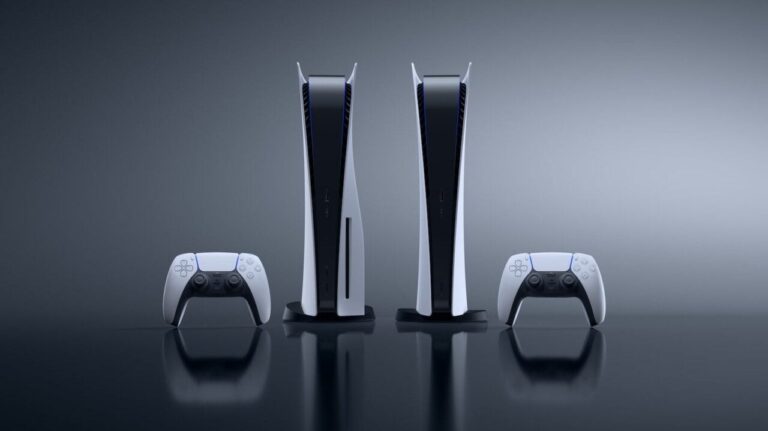
Sony’s likely approach to the PS6 mirrors its successful PS5 strategy of offering multiple versions rather than forcing an all-digital future. The PS5 launched with a disc drive included in the base model while offering a separate Digital Edition, allowing consumers to choose their preferred format. Industry leaks suggest the PS6 base model may emphasize digital distribution to control launch pricing, but a detachable or separately purchasable disc drive is heavily rumored, maintaining consumer choice rather than eliminating physical media entirely.
This two-pronged approach has proven commercially successful for Sony, allowing the company to capture both digital-native consumers and players who value backward compatibility and used game markets. The strategy reflects PlayStation’s global market position, where disc availability remains critical in regions with less robust digital infrastructure or higher internet costs.
What Comes Next for Next-Generation Hardware
The coming months will clarify whether the PS6 launches in Holiday 2027 as insiders suggest or slips to 2028 or 2029 as analysts predict. Component availability, particularly GDDR7 memory sourcing, will likely determine the final timeline, with each quarter bringing supply chain updates that could shift launch windows. Sony’s official announcements about console specifications, pricing, and the physical media question remain critical milestones that will reshape competitive positioning between PlayStation and Xbox.
The divergence between insider leaks and analyst predictions underscores the genuine uncertainty surrounding next-generation hardware in an era of supply chain volatility and extended console lifecycles. Whether the PS6 launches in 2027, 2028, or 2029, and whether it includes physical media support, will define the competitive landscape for the remainder of this decade’s gaming market.
