
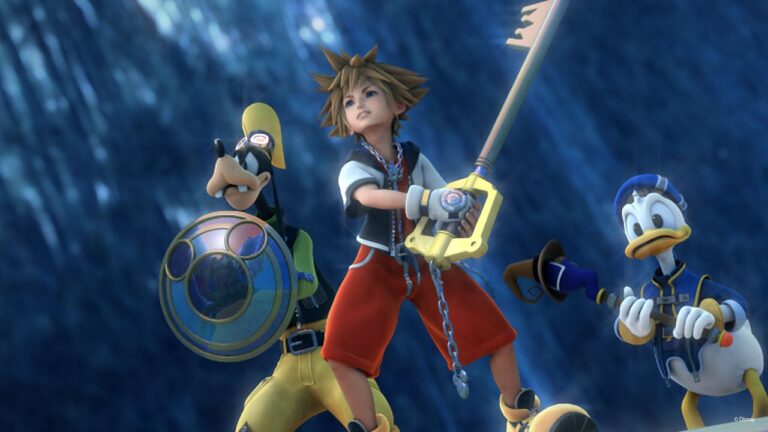
Guillaume Broche, creative director of upcoming action RPG Clair Obscur: Expedition 33, has publicly declared Kingdom Hearts II the “gold standard for action RPGs,” citing its unmatched combat depth and lasting influence on modern game design. The statement marks a significant moment of cross-generational validation, with a contemporary indie studio leader elevating Square Enix’s 2005 PlayStation 2 classic above all competitors, including its own franchise successors. Broche ranked Kingdom Hearts II among his personal top five games of all time, a distinction he rarely extends to other titles in the action RPG space.
A Modern Developer’s Endorsement of a Classic Blockbuster
In recent interviews, Broche elaborated on his assessment, emphasizing that while Kingdom Hearts III was “not bad,” it “never quite matched Kingdom Hearts II in gameplay” and “couldn’t recapture what Kingdom Hearts II brought to the table.” This comparison carries weight because it challenges the assumption that newer entries in established franchises automatically surpass their predecessors. Broche specifically highlighted the late-game depth of Kingdom Hearts II as a feature that modern titles struggle to replicate, positioning the 2005 release as a benchmark rather than a historical artifact.
Broche’s admiration centers on the game’s intricate mechanics and the sheer amount of content available to dedicated players. Kingdom Hearts II was developed by several hundred people over multiple years with a budget in the tens of millions of dollars—a massive undertaking that reflected Square Enix and publisher Buena Vista Games’ commitment to the project. The scale of this production, combined with director Tetsuya Nomura’s consistent creative vision since the franchise’s 2002 debut, created a game that balanced blockbuster resources with refined gameplay systems that continue to resonate with industry leaders decades later.
Commercial Success That Defined a Generation
Kingdom Hearts II’s legacy extends far beyond critical acclaim into sustained commercial dominance. The title has sold approximately 4.33 million units globally, making it the 13th best-selling PlayStation 2 game of all time—a remarkable achievement for a 2005 release in an increasingly crowded market. The game entered full development in 2003 and launched on December 22, 2005, in Japan, with global releases rolling out throughout 2006, each territory contributing to its mounting sales totals.
North America proved particularly receptive to the Kingdom Hearts II experience. Square Enix and Buena Vista Games announced on May 2, 2006, that the game had shipped more than one million units in the region alone, occurring just months after the North American release at a $49.99 retail price. This milestone underscored the immediate commercial impact of the title and demonstrated that the franchise’s appeal transcended its niche origins to become a mainstream PlayStation 2 phenomenon.
Industry Recognition and Comparative Analysis
Broche’s public statements have reignited discussion within the gaming industry about what constitutes excellence in action RPG design. His assertion that Kingdom Hearts II represents the “gold standard” for the genre carries particular significance given his position as a creative leader developing a major new action RPG franchise. The comparison suggests that Clair Obscur: Expedition 33 will likely benchmark itself against Kingdom Hearts II’s combat depth and content structure as it aims to establish its own legacy in the action RPG space.
Contemporary game developers and industry analysts are noting the implications of Broche’s endorsement. His emphasis on Kingdom Hearts II’s lasting influence indicates that the 2005 title succeeded in creating systems and mechanics that remain relevant and worthy of emulation by modern studios. This perspective contradicts the industry tendency to dismiss older games as outdated, instead positioning Kingdom Hearts II as a timeless reference point that developers continue to learn from and aspire toward.
A PlayStation 2 Era Masterpiece Defined by Scale and Craft
Kingdom Hearts II represents a specific moment in gaming history when major publishers combined substantial resources, established intellectual property partnerships, and refined game design to create experiences that would endure far beyond their release cycle. The collaboration between Square Enix and Disney Interactive Studios, shepherded by Nomura’s directorial vision, produced a game that balanced licensed character appeal with legitimate mechanical depth. Released during the PlayStation 2’s peak commercial period, Kingdom Hearts II benefited from the console’s market saturation while simultaneously standing out through its unique fusion of Disney charm and complex action RPG systems.
RPGFan’s contemporary review described the game as “outstanding,” noting that “lots of money was put behind this game” and praising the emotional resonance created by its Disney character integration. This critical reception, combined with Broche’s modern validation, creates a through-line of appreciation spanning from 2005 to the present day, suggesting that Kingdom Hearts II’s design principles transcend generational shifts in gaming hardware and player expectations.
What Lies Ahead for Action RPG Standards
As Clair Obscur: Expedition 33 approaches its release window, industry observers will likely scrutinize how Broche and Sandfall Interactive translate their stated admiration for Kingdom Hearts II into their own game’s combat systems and content structure. Broche’s public positioning of Kingdom Hearts II as the definitive action RPG suggests that Clair Obscur will attempt to match or exceed the depth and mechanical sophistication that made the 2005 title enduring. The developer’s willingness to publicly acknowledge Kingdom Hearts II as superior to Kingdom Hearts III also signals confidence in his team’s ability to learn from and build upon established excellence.
Kingdom Hearts II’s continued relevance in contemporary game development conversations demonstrates that quality action RPG design remains timeless. Broche’s endorsement ensures that a new generation of players and developers will examine the 2005 classic with fresh perspective, potentially inspiring a broader reassessment of PlayStation 2 era design principles. The game’s position as the gold standard for action RPGs—validated by a modern studio leader creating the next generation of experiences in that genre—guarantees that Kingdom Hearts II’s influence will continue shaping the industry’s approach to combat depth, content volume, and mechanical complexity.
