
Key takeaways
- Competitive gaming emerged organically during the 1980s and early 1990s, driven by arcade culture and the rise of home computers.
- The widespread adoption of broadband internet in the late 1990s and early 2000s fundamentally changed competitive gaming by enabling players worldwide to compete without physical proximity.
- While StarCraft dominated competitive gaming in Asia, different games gained prominence in Western markets, creating a diverse esports ecosystem.
- The transition from internet cafes and convention centers to large-scale venues marked esports’ evolution into mainstream entertainment.
Esports—competitive video gaming at an organized, often professional level—has evolved from informal basement competitions into a global industry worth billions of dollars. Understanding this trajectory reveals how technological advancement, community building, and mainstream acceptance transformed gaming from a solitary hobby into a spectator sport rivaling traditional athletics. This transformation fundamentally changed how millions of people engage with video games and careers within the industry.
The Foundation: Early Competitive Gaming and LAN Parties
Competitive gaming emerged organically during the 1980s and early 1990s, driven by arcade culture and the rise of home computers. Players gathered in arcades to compete in games like Donkey Kong and Street Fighter II, with high scores displayed on cabinets and bragging rights determining champions. These arcade communities created the first competitive gaming culture, establishing tournaments and recognized champions before the internet existed.
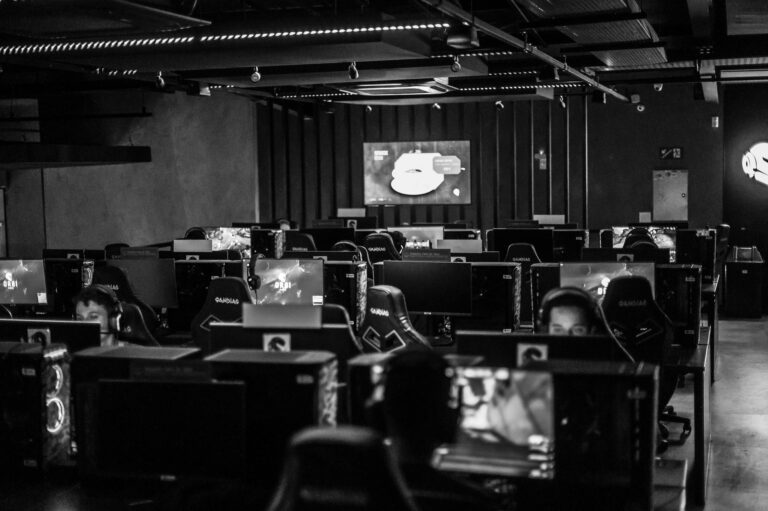
The transition to personal computers introduced Local Area Networks (LANs)—physical connections between multiple computers in a single location that allowed players to compete directly. LAN parties became the primary venue for organized competitive gaming throughout the 1990s, with events like QuakeCon, founded in 1996 by id Software and the community, drawing hundreds then thousands of participants. These gatherings created the infrastructure and social bonds that would later support professional Esports.
The Rise of Internet Connectivity and Online Competition
The widespread adoption of broadband internet in the late 1990s and early 2000s fundamentally changed competitive gaming by enabling players worldwide to compete without physical proximity. Games like StarCraft, released by Blizzard Entertainment in 1998, became the first truly global competitive phenomenon, particularly in South Korea where the game achieved cultural saturation. StarCraft’s balanced gameplay, strategic depth, and spectator-friendly mechanics made it ideal for competitive play, and the Korean Esports ecosystem that developed around it established many conventions still used today.
South Korea transformed esports into a legitimate professional industry by creating organized leagues, broadcasting matches on television, and attracting sponsorship from major corporations. The Korean Starcraft Pro League, established in 2000, pioneered the franchise system, player contracts, and media broadcasting that defined professional esports. By the mid-2000s, professional StarCraft players in Korea earned salaries comparable to traditional athletes, and matches drew television audiences numbering in the millions.
Game Diversity and Genre Expansion
While StarCraft dominated competitive gaming in Asia, different games gained prominence in Western markets, creating a diverse esports ecosystem. Counter-Strike, a tactical first-person shooter released as a mod for Half-Life in 1999, became the dominant competitive game in North America and Europe, spawning numerous international tournaments and professional teams. The game’s emphasis on teamwork, economy management, and map control created compelling competitive moments that attracted both players and spectators.
Dota 2, released by Valve in 2013, introduced the multiplayer online battle arena (MOBA) genre—a category where two teams of five players compete to destroy the opposing team’s base—to mainstream esports audiences. The International, Dota 2’s annual world championship, offered prize pools exceeding $20 million by the 2010s, establishing it as one of esports’ most prestigious competitions. League of Legends, released by Riot Games in 2009, similarly captured massive audiences and created regional professional leagues across multiple continents.
The Stadium Era and Mainstream Integration
The transition from internet cafes and convention centers to large-scale venues marked esports’ evolution into mainstream entertainment. The 2016 League of Legends World Championship finals were held at Madison Square Garden in New York, drawing 11,000 spectators and demonstrating that esports could fill traditional sports venues. This milestone signified esports’ acceptance as legitimate entertainment worthy of premium venues historically reserved for music, theater, and professional sports.
Television networks and streaming platforms accelerated mainstream adoption by providing accessible coverage to global audiences. ESPN began broadcasting esports content, major sports networks acquired broadcasting rights to professional leagues, and platforms like Twitch created dedicated streaming infrastructure where millions watched esports content simultaneously. The 2020 League of Legends World Championship drew over 100 million unique viewers across all platforms, exceeding viewership for many traditional sporting events.
Franchise systems similar to traditional sports leagues emerged across multiple esports titles, with teams investing hundreds of millions in player development, training facilities, and organizational infrastructure. The Overwatch League, launched in 2018, adopted a city-based franchise model explicitly modeled on traditional sports leagues, with teams representing cities like Seoul, London, and San Francisco. These investments signaled that esports had achieved sufficient stability and revenue potential to support long-term institutional commitment.
Evolution of Player Professionalism and Career Paths
Early competitive gamers were hobbyists balancing competition with other employment, but the modern esports ecosystem supports full-time professional careers with salaries, sponsorships, and endorsement deals. Professional players now receive coaching in game mechanics, team strategy, physical fitness, and mental health—services previously unavailable in gaming but standard in traditional sports. Organizations employ sports psychologists, nutritionists, and performance analysts to optimize player development and longevity.
Educational pathways have formalized around esports, with universities offering scholarships to competitive players and esports management programs training the next generation of league administrators and team executives. Institutions like the University of California, Irvine and Robert Morris University established esports programs offering scholarships comparable to traditional athletic programs. This institutionalization transformed esports from an underground hobby into a recognized career path with structured progression.
Frequently Asked Questions
When did esports first become profitable for players?
Professional esports became genuinely profitable in South Korea during the early 2000s, with StarCraft players earning salaries from teams and tournament winnings. In Western markets, significant prize pools and player salaries emerged in the mid-2000s with games like Counter-Strike and Dota 2, though Korean esports remained the most lucrative market for the longest period.
Which game is considered the first major esports title?
StarCraft holds this distinction due to its unprecedented competitive success in South Korea and its role in establishing professional esports infrastructure, organizational systems, and media broadcasting. While arcade games and earlier titles had competitive communities, StarCraft created the first sustainable, organized professional ecosystem.
How much money do esports generate annually?
The global esports market generates revenues in the billions of dollars annually through sponsorships, media rights, ticket sales, and merchandise. Prize pools alone have exceeded $500 million in recent years across all major esports titles, with individual tournaments offering tens of millions in prize money.
The journey from LAN parties in basements to packed stadiums demonstrates how competitive gaming evolved from a niche hobby into a global industry reshaping entertainment, technology, and professional sports. This transformation continues as new games emerge, new regions develop their own esports ecosystems, and mainstream institutions increasingly recognize esports’ cultural and economic significance.
