
Key takeaways
- A room in Dark Souls before the Ornstein and Smough boss fight has become Rebekah Valentine's personal frustration point, despite the encounter itself being mechanically straightforward.
- The frustration stems from wanting to summon Solaire of Astora from across the room, which requires defeating three enemies with an enormous aggression range that makes it impossible to avoid them.
- Repetitive runs through the same enemies have created psychological frustration rather than mechanical difficulty, with Valentine consistently executing poorly despite knowing she can defeat the enemies reliably.
- The encounter forces resource expenditure through Estus flask consumption and Humanity burning, with failed attempts requiring additional farming runs back through Sen's Fortress to acquire more Humanity.
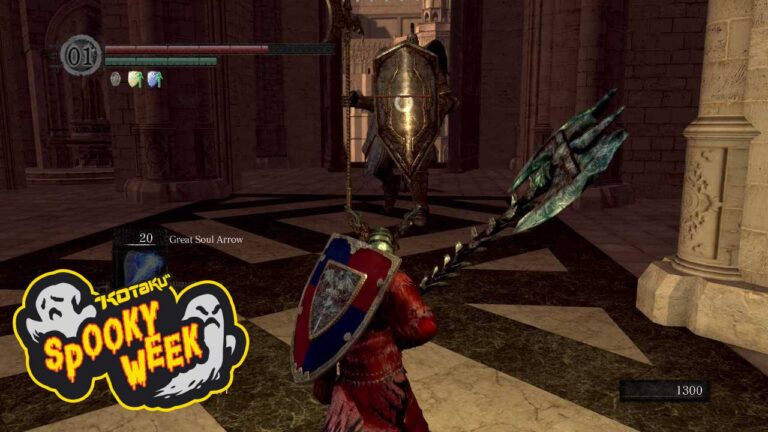
Rebekah Valentine has been revisiting the original Dark Souls after never completing it during her first attempt, which ended at Blighttown following her victory over Gaping Dragon. This time around she has pushed past that barrier and made it nearly all the way through most of Anor Londo. By her own assessment, the game is a classic, and FromSoftware’s ability to punish players in comical ways keeps the experience entertaining. But her playthrough has revealed something unexpected: the real nightmare is not the famous Ornstein and Smough boss duo that awaits her, but rather the single room that stands directly in front of them.
The Room Before the Boss
According to Kotaku, the issue is not about facing difficult enemies under normal circumstances. The problem stems from a specific objective that Valentine has committed to despite its unnecessary difficulty. She wants to summon Solaire of Astora into the fight with Ornstein and Smough. Solaire represents both a mechanical advantage against the infamous boss pairing and a story moment that feels rewarding when coordinating with a named character. This desire to bring him along creates an unusual constraint that transforms the preceding chamber into something far more complicated than it needs to be.
The Architecture of Frustration
Summoning Location vs. Boss Entrance
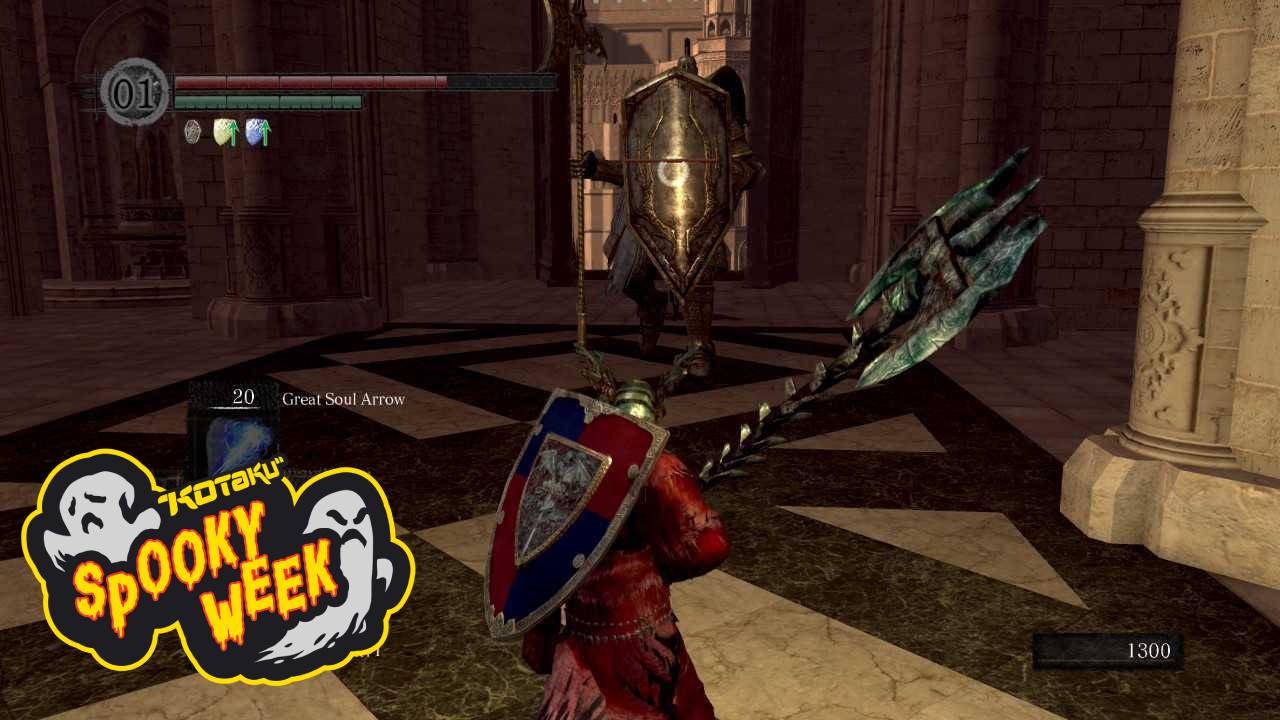
Solaire’s summon sign occupies the opposite end of the room from where players must eventually pass through to reach the boss fog gate. To retrieve him without triggering combat mechanics that would compromise the fight ahead, Valentine must navigate a careful path that ultimately proves impossible. The room’s three enemy encounters have an aggression range so extensive that avoiding them while moving through the space is effectively unfeasible.
The Unavoidable Encounter
Getting to Solaire without aggroing the enemies would theoretically be simple, except that his summon animation requires several seconds to complete. There is no opportunity to dash across the room, activate the sign, and continue onward before the enemies engage. The alternative is to kill all three enemies first, then safely summon Solaire, and proceed to the boss fight. This transforms what should be a quick transition into a multi-stage combat sequence that drains resources and patience alike.
The Three Enemies and Their Mechanics
The Archer
The first enemy is a silver knight archer positioned at range. Valentine reports that this opponent falls relatively quickly, requiring only two to three swings of her large axe on a typical run. Sprint attacks can bypass most arrow fire, making this the least troublesome of the three encounters. Once dispatched, only the pair downstairs remains.
The Armored Knights
The two bigger enemies present the actual problem. These shield-bearing knights are slow and heavily telegraphed in their attacks. By every conventional metric they should be trivial to defeat, yet they inflict disproportionate punishment through their moveset variety. They transition between spear thrusts and shield slams. The slam technique creates area damage over a large radius and typically knocks Valentine down, leaving her vulnerable to followup spear attacks while she rises. Both enemies also employ healing spells mid-fight, artificially extending the encounter. Getting behind them to damage their unarmored backs requires multiple solid hits to eliminate, turning what ought to be a quick fight into an extended grind.
Repetition as Psychological Warfare
Valentine has now repeated this room run enough times that mechanical execution has become secondary to mental state. She acknowledges that on paper she can defeat these enemies reliably, yet repetition has introduced self-doubt. The standard strategy is not complicated: identify tells, dodge appropriately, strike when safe. In practice, after cycling through the run countless times, she finds herself either burning through Estus flasks unnecessarily or taking hits she should easily avoid. The psychological weight of repetition appears to be the actual difficulty, not the encounter itself.
Part of the frustration derives from the sheer length of the prerequisite journey. Getting to this room from the nearest bonfires already demands traversing long corridors and navigating enemy encounters. One path is mostly empty except for two large knight enemies at the terminus. The second route includes scattered silver knights that can be outrun. Either way consumes time before reaching the actual problem room. Once inside, the need to methodically eliminate three enemies before attempting to summon Solaire transforms what should be a quick approach into a time investment that tests patience.
Resource Depletion and Sunbro Stubbornness
Valentine has flatly refused to adopt a simpler approach. Instead of bypassing Solaire and walking directly through the fog gate to fight Ornstein and Smough alone, she persists in her goal. This commitment carries a material cost: summoning Solaire requires burning Humanity at the bonfire before each attempt. When the three enemies kill her before she can complete the summon, the Humanity is wasted. This cycle has depleted her stock entirely. Farming additional Humanity requires backtracking through Sen’s Fortress and returning to Firelink Shrine, creating a secondary time sink imposed by her own decision-making.
The Specificity of the Complaint
Kotaku notes that FromSoftware’s reputation for creating situations that frustrate players in entertaining ways is well-earned throughout Dark Souls. The infamous archers on the ramparts in Anor Londo typically receive more complaints than any other section. By comparison, Valentine views those encounters as trivial. Her specific grievance with this room is that it should be simple. Nothing about it is mechanically complex. Nothing about it requires learning new patterns or abilities. It is entirely a resource drain that exists solely to gate access to a summon sign placed at an inconvenient distance from its intended use.
Source: Kotaku
Frequently Asked Questions
Why doesn't Rebekah Valentine just skip summoning Solaire and fight Ornstein and Smough alone?
She refuses to change her strategy because Solaire is a story character she wants to team up with for the big fight. He also provides a mechanical advantage against the otherwise very challenging boss pairing.
What are the three enemies in the room before Ornstein and Smough?
One silver knight archer that takes two to three hits with a large axe, and two bigger armored knights with shields that heal themselves, push players back with spells, and perform area-damage shield slams.
Why can't Valentine just quickly grab Solaire's summon sign and run to the boss?
Summoning Solaire requires several seconds to complete, and the three enemies have such a massive aggression range throughout the room that they will engage and prevent her from initiating the summon before getting attacked.
