
Key takeaways
- Chris Metzen was absent from all major World of Warcraft announcements at BlizzCon 2026, sparking immediate speculation about conflicts or his departure from Blizzard.
- Metzen has publicly discussed lifelong struggles with anxiety and panic attacks in public settings, a factor that likely explains his decision to remain backstage without indicating any problem at the studio.
- His voice work and creative contributions continue—he appears in WoW: Forever materials and remains instrumental in character development for upcoming content.
- World of Warcraft's future depends on its entire creative team rather than any single person, though Metzen's ongoing work will help shape the expansions ahead.
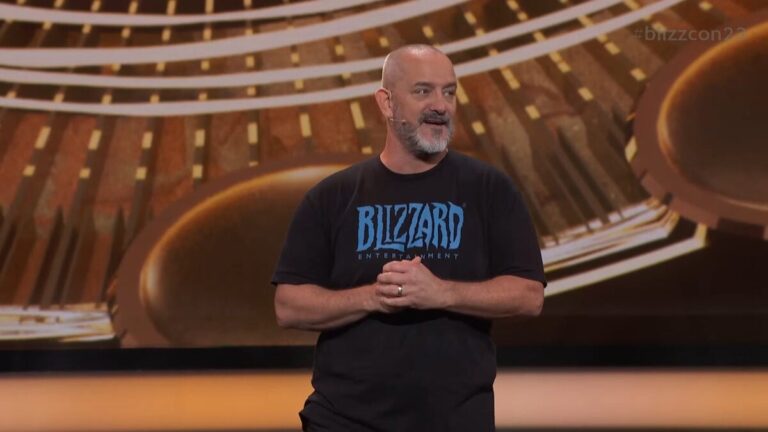
At BlizzCon 2026, Chris Metzen did not appear on the main stage to unveil World of Warcraft announcements. During presentations for WoW: Midnight and The Last Titan, and during the reveal of World of Warcraft: Forever, Metzen remained absent. He did not participate in developer Q&A sessions, and attendees reported no sign of him on the show floor, though former Blizzard president Mike Morhaime appeared in person. The absence immediately sparked concern among fans: had something gone wrong at the studio? Was Metzen leaving? Had conflict erupted behind the scenes?
Who Is Chris Metzen and Why His Presence Mattered
For decades, Metzen has anchored Blizzard’s core franchises. As an artist, writer, and voice actor, he shaped the narrative and visual identity of World of Warcraft and Warcraft 3. Most recognizably, he performed the voice of Thrall, the orc warrior central to WoW lore. Metzen also directed creative development for multiple expansions, storylines, and locations across both games.
His significance extended beyond game development. For years, Metzen was a visible presence at BlizzCon, standing on the main stage to deliver major announcements. His 2011 unveiling of the Mists of Pandaria expansion became the template for how Blizzard revealed new content: Metzen onstage, demonstrating personal investment in the project, carrying the audience’s energy forward.
The Timeline: Retirement, Return, and Recent Role
The 2016 departure and extended absence
Metzen stepped away from active development in 2016, taking a complete retirement from Blizzard. For six years, he remained out of the studio’s public-facing work.
His 2022 return as creative advisor
In 2022, Metzen reentered Blizzard as a creative advisor, a position that kept him involved with WoW’s long-term vision without the weight of day-to-day operations. His role expanded in 2023, when he became Warcraft executive creative director, positioning him as the steward of the franchise’s narrative direction.
The Worldsoul Saga announcement at BlizzCon 2023
At BlizzCon 2023, Metzen took the stage to announce the Worldsoul Saga, a multiyear story arc designed to resolve numerous longstanding plot threads. The saga was positioned as an epic conclusion to narrative conflicts that had been building for years. The community responded with enthusiasm. The return of Metzen combined with a promise of narrative resolution convinced many observers that the expansions ahead would address their concerns.
The Lead-Up to BlizzCon 2026
The Worldsoul Saga rolled out across two expansions: The War Within, which achieved strong reception, and Midnight, which performed well despite some fluctuations. The final chapter, The Last Titan, stood positioned as the saga’s conclusion, the moment when years of storytelling would reach culmination.
Given that Metzen had personally announced the trilogy, observers expected him at BlizzCon 2026 to showcase The Last Titan and guide the community through the saga’s endgame. His presence seemed almost automatic—not merely a courtesy appearance, but confirmation that the conclusion he had promised would carry his direct involvement.
Instead, he did not appear.
Fan Alarm and Immediate Theories
The absence generated anxiety across forums and social media. Some worried his presence reflected his departure from the company. Others interpreted it as evidence that Blizzard had sidelined him or that internal conflict had surfaced. A few speculated that health or personal circumstances had pulled him away unexpectedly. The silence, the lack of any official explanation, only deepened uncertainty.
These concerns were not unfounded. When a prominent creative figure vanishes from a major event they have historically defined, questions follow. But the reality, based on Metzen’s own public statements, is considerably simpler.
What Metzen Has Actually Disclosed
The podcast discussion of anxiety and public life
In a podcast interview with Scott Johnson, Metzen discussed his 2016 retirement in detail. Public accounts focused on his struggle with anxiety, panic attacks, and escalating doubt—conditions that intensified over years until stepping away became necessary for his wellbeing. The full podcast contained additional context rarely circulated in news coverage: Metzen specifically addressed how these conditions undermined his capacity to function in public settings and on large stages.
He described himself as an introvert at heart, someone whose natural disposition runs toward solitude and creative work rather than crowds and spotlights. The gregarious version of himself that appears at industry events is genuine but increasingly incompatible with his core temperament. Over time, as work stress accumulated, bridging the gap between his internal self and his public persona became harder to sustain.
A 2016 incident that illustrates the pattern
Metzen recounted planning to attend a Weird Al concert at BlizzCon 2016 with his children, after he had already left the company. He expected to be in better condition by then, prepared for a simple evening with his kids. A week before the event, panic seized him. He described waking in cold sweat, convinced his condition was not improving as he had believed. The guilt of canceling on his children was severe, though his brother stepped in to take them. Metzen attributed the collapse to his brain’s tendency to spiral into catastrophic thinking, a force that felt like a persistent threat constantly on the horizon.
Specific fears present during public appearances
During the podcast, Metzen elaborated on the irrational fears that surface during public appearances. Being in crowded lobbies during BlizzCon, stepping onstage to announce new games—these situations trigger rumination about worst-case scenarios. He mentioned worrying about security and how to escape if danger arose. He spoke of entertaining bizarre fantasies, such as someone in the audience being so angry about a shaman nerf that violence might result. He acknowledged how absurd these thoughts are even as he described their psychological pull on him.
Why His Absence Signals Nothing Troubling About WoW’s Future
The most important observation is the simplest: Metzen is still working. His voice appears in the World of Warcraft: Forever gameplay trailer. He remains involved in character development, instrumental in designing the Skyborne race for WoW: Forever. A month before BlizzCon 2026, he announced a new Dungeons & Dragons 5E campaign setting, evidence that he remains creatively active and valued at the studio.
His absence from the stage does not equal withdrawal from the project. It simply means he has chosen not to subject himself to the public ordeal of a BlizzCon presentation. That choice is entirely reasonable given what he has revealed about his internal life. There is no mystery to investigate. There is no hint of internal conflict or forced departure. Metzen is performing the work he loves—writing, designing, and directing narrative—without the additional toll of standing in front of thousands of people.
The Broader Truth About World of Warcraft’s Creation
The community’s focus on Metzen’s presence misses a fundamental fact: massive multiplayer games are collaborative endeavors. World of Warcraft emerges from the work of hundreds of developers, designers, writers, artists, and engineers. While Metzen’s contributions are substantial and his influence real, the game does not live or die by his onstage appearances.
Holly Longdale has risen as a key spokesperson for Blizzard in recent years, delivering announcements with evident enthusiasm. Ian Hazzikostas continues to articulate the studio’s direction and vision. Other developers, each with distinct expertise and commitment, carry the work forward. Elevating multiple voices from across the team would only strengthen community understanding of how these games come together.
Metzen’s contributions will absolutely shape the future of World of Warcraft, as will the contributions of every other person on the creative team. The completion of the Worldsoul Saga will be a team achievement. Allowing others to carry the torch onstage does not diminish his role in making that accomplishment possible.
Frequently Asked Questions
Why wasn't Chris Metzen at BlizzCon 2026?
Metzen was absent from announcements of World of Warcraft: Midnight, The Last Titan, and World of Warcraft: Forever. While he has not made a public statement about this specific absence, he previously disclosed in a podcast interview struggles with anxiety and panic attacks triggered by public appearances and crowded spaces, which likely explains his decision to remain backstage.
Is Chris Metzen still working on World of Warcraft?
Yes. His voice appears in the World of Warcraft: Forever gameplay trailer, he continues to voice WoW characters, and he was instrumental in developing the Skyborne race for WoW: Forever. He also announced a new Dungeons & Dragons 5E campaign setting a month before BlizzCon 2026, demonstrating his continued creative involvement.
What did Metzen say about his anxiety and public events?
In a podcast with Scott Johnson, Metzen described his 2016 retirement as driven by escalating anxiety, panic attacks, and doubt. He discussed how these conditions made public appearances increasingly difficult, including a 2016 incident where he had to cancel taking his children to a concert at BlizzCon after panic returned. He also described irrational fears that surface onstage, such as worrying about security or audience members becoming hostile.
